Psychological Profiles of Different Alleles of the ABCC11 Gene
PSYCHOLOGICAL PROFILES OF DIFFERENT ALLELES OF THE ABCC11 GENE –
Does a Single Gene Give China and Japan a 20% Head Start in Global Competition?
V. L. Talanov:
BACKGROUND
Let us begin with a brief account of the ABCC11 gene.
Its history began with a fairly typical “study by British scientists” in the early 1990s. The gene was discovered thanks to a study conducted in the early 90s on 6495 women and their children at a medical university in Bristol, England, which was published in one of the medical journals. The researchers took blood samples (which contain genetic material) and asked the women which hygiene products they used (the study was probably sponsored by cosmetics companies). Joking aside, the scientists ultimately found that 98% of the women had the gene responsible for “underarm odor,” while 95% used deodorant daily. But 117 of the women were “odorless,” because they had a special version of a certain gene.
These and numerous subsequent studies showed that the version of the ABCC11 gene, located on human chromosome 16, is solely responsible for the presence or absence of sweat odor. At present, the following can be stated:
- All mammals, including humans, have sweat glands. Therefore, all people sweat, but with different intensity. Sweat glands are distributed over the entire surface of the human body, but their density is higher in certain areas: the armpits, soles, palms, forehead, and upper lip. On average, the number of such glands is on the order of two hundred per square centimeter! Sweating is a very important process for internal balance. Salts, waste products, and excess moisture leave a healthy body together with sweat, and sweating regulates body temperature. This thermoregulation is performed by eccrine sweat glands distributed throughout the body.
- A person also sweats under stress, but this function is carried out through other glands — apocrine glands. There are far more apocrine sweat glands in the armpits, groin, and auditory canal. The ABCC11 gene regulates the functional activity and number of apocrine glands only. It is sweat from the apocrine glands that produces the characteristic odor of sweat – the point is that their sweat secretions contain many specific peptides (signaling hormones), which are then consumed by bacteria. In turn, the metabolic products of bacteria colonizing the outlets of the apocrine glands are aromatic acids, which give sweat its characteristic pungent odor. People whose sweat smells strongly have intense secretion from the apocrine glands. Conversely, the sweat of people with low functional activity of the apocrine glands does not have a pungent odor, but only a very faintly perceptible “sour” smell.
- “Earwax” is a secretion product of the apocrine glands in the auditory canal. When the functional activity of the apocrine glands is low, earwax is dry and appears as dryish flaking scales (the color may vary, but it is most often light yellow). Under light pressure, plates or lumps of dry wax are scarcely deformed; it does not exhibit flowing plasticity. Conversely, when the apocrine glands of the auditory canal are active, wet earwax is produced, more often brownish or brown in color, and its consistency can vary from liquid, resembling paste or honey, to the consistency of soft modeling clay. In any case, samples of such earwax are easily deformed even under very light pressure. In addition to differing intensities of sweat secretion, different alleles of the gene also produce different types of peptides in the apocrine glands. The mutated, recessive version of this gene produces peptides that are not completely broken down by bacteria, which in turn reduces sweat odor and affects the composition of earwax. Thus, both sweat odor and the nature of earwax depend on the allele version of the ABCC11 gene, and ultimately – on its activity (expression level).
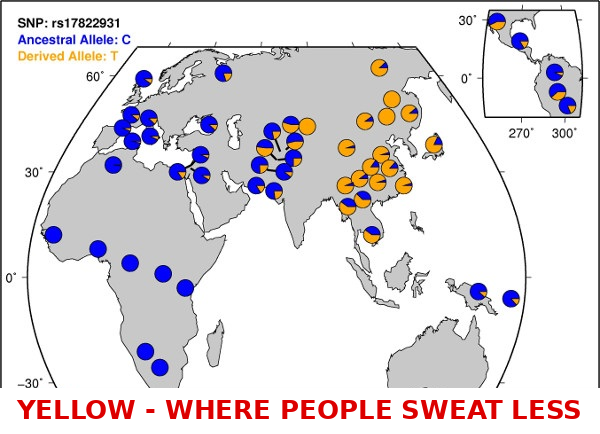
- The first scientists to notice that some peoples sweat less than others were the German physiologist Karl Vogt and the traveler Johann Kohl in the nineteenth century. In their works, they noted that the volume of sweat secretion and, most importantly, odor among the peoples of East Asia are much weaker than among Caucasians, Europeans, or Africans. We now know that the inhabitants of East Asia have fewer apocrine sweat glands, and these glands are very small. Accordingly, natives of these countries release less moisture into the environment; even their earwax is dry, whereas among the inhabitants of the other regions of the planet it is wet. This indicator is also hereditary. Another important factor is the low protein content of the sweat of these peoples, so the odor is less strong. It has been noted that, compared with Europeans or Africans, the peoples of East Asia are also characterized by short stature and an outwardly fragile build, but they are extremely strong and enduring. Interestingly, their bodies are denser: their weight is approximately 10 percent greater than that of a European of the same build. Even small children are unexpectedly heavy when picked up.
- It was established that a particular gene, ABCC11, is responsible for sweating by the apocrine glands as well as for their size and number (and ultimately both for sweat odor and for the type of earwax), and that it may be present in the body but inactive as a result of an inherited single-nucleotide mutation that sharply reduces its functionality. Among people of the Mongoloid race and Native Americans, this mutation is present, and therefore the dry type of earwax and absence of sweat odor (especially under the arms) are observed more often, whereas representatives of the Caucasoid and Negroid races more often have the soft type of wax because the aforementioned single-nucleotide gene mutation is absent. Thus, earwax type is genetically predetermined, and the ABCC11 gene responsible for it is located on chromosome 16 (16q11.2-16q12.1). The ABCC11 gene (WW; EWWD; MRP8) encodes ATP-binding cassette transporter 11, subfamily C (ATP-binding cassette subfamily C member 11). In the human body, the ABCC11 gene is responsible for the consistency of earwax (dry or wet type) and the occurrence of sweat odor in the armpits. Interestingly, earwax type is one of the few phenotypic traits in humans that is controlled by a single gene [2].
- The aforementioned mutation, which “kills” expression of the ABCC11 gene and ultimately makes it “silent” (which ultimately leads to a sharp reduction in the activity of the apocrine sweat glands, a reduction in sweat odor, and the appearance of dry earwax), consists of replacing the nucleotide base Guanine with the nucleotide base Adenine in a region of the gene (G -> A), that is, it is a single-nucleotide substitution. The adenine allele is recessive, so the greatest suppression of sweating by the apocrine glands occurs only in people with such a double set of alleles, in which both alleles are recessive (AA). The (GG) and (GA) sets differ little from each other in total sweat secretion, although they still differ slightly. However, genuinely dry earwax and the absence of sweat odor are typical of people with a double set of recessive gene alleles - (AA). If the average frequency of allele A among Russians is approximately 0,246, then the proportion of people with dry earwax and absent sweat odor, that is, with the diploid (AA) set, in the Russian population should be approximately 0,246*0,246=0,06, that is, approximately 6%.
- Dominant gene alleles containing guanine produce a glycosylated protein. It is completely broken down by bacteria, which causes a strong sweat odor in the armpits. But recessive (mutated) gene alleles containing adenine produce a non-glycosylated protein in the apocrine sweat glands. Such a protein is only partially broken down by bacterial proteasomes, and as a result no sweat odor appears [16].
- It is assumed that the evolutionary utility of the original, unmutated version of the gene (GG) lay in the positive signaling value of a strong sweat odor. According to a popular theory, ancient humans must have had the dominant guanine allele of the ABCC11 gene, which causes hypersecretion of the apocrine glands. The intensified sweat odor regulated by the ABCC11 gene may have been important for nonverbal communication among ancient Homo sapiens [13, 14, 15]. But how the mutated version with absent sweat odor (AA) could have become established among Asians remains an open question to this day. It has been suggested that strong positive selection in choosing a low-odor partner by a person who is also low-odor (that is, with a dysfunctional ABCC11 gene) appears to be a plausible explanation for the establishment of a high frequency of the loss-of-function allele in the Asian population (see [6] in the references). But no one has explained what the evolutionary advantage is here. The psychological changes and advantages that may accompany this mutation at another level, the level of a person’s innate temperament, have not been considered by anyone to date, because no one has tested or investigated them.
- In addition to the influence of different ABCC11 gene alleles on sweating, it has also been shown that women with the European version of the gene secrete colostrum more intensively shortly before childbirth [11]. Beyond this, science has known nothing more about the action of this gene to date. Studies of the potential influence of different alleles of this gene on psychological differences between people have probably not been conducted; in any case, we are not aware of any.
ABCC11 Gene
Identifiers
| Field | Information |
|---|---|
| Pseudonyms | ABCC11, ATP-binding cassette, subfamily C (CFTR / MRP), member 11, EWWD, MRP8, WW, ATP-binding cassette, subfamily C, member 11, ATP-binding cassette transporter, subfamily C, member 1 |
| External identifiers | OMIM: 607040; HomoloGene: 69511; GeneCards: ABCC11 |
Gene location (human)
| Field | Information |
|---|---|
| Chromosome | Chromosome 16 (human) |
| Group | 16q12.1 |
| Start | 48,166,910 bp |
| End | 48,247,568 bp |
Source: Wikipedia
SHARE OF THE RECESSIVE (ASIAN) ADENINE ALLELE “A” OF THE GENE AMONG THE ETHNIC POPULATIONS OF DIFFERENT COUNTRIES, ACCORDING TO A META-ANALYSIS OF THE RESULTS OF A NUMBER OF GENETIC-DEMOGRAPHIC STUDIES:
South Korea – 1,000 (100%)
China – from 0,845 to 1,000 depending on locality
Mongolia – 0,867
Japan – from 0,683 to 0,829 depending on locality
Vietnam – 0,732
Thailand – from 0,696 to 0,735 in Northern Thailand, but 0,175 in southern Thailand
India (but only the Dravidians of Tamil State) – 0,710
Indonesia – from 0,340 to 0,573
Malaysia – from 0,394 to 0,566 in Northern Borneo
Taiwan – 0,563
Philippines – 0,469
Bolivia – 0,400
Kazakhstan – 0,383
Russia – 0,246
France – 0,208
Hungary – 0,200
Israel, Ashkenazi Jews – 0,200
Ukraine – 0,179
Colombia – 0,059
Venezuela – 0,047
USA - White Americans (excluding Latinos and people from France) – 0,110
USA – Native North American Indians – 0,500
African Americans – 0,000

EXPERIMENTAL TEST OF THE PSYCHOLOGICAL PROFILES OF THE ABCC11 GENE
In his socionic statistics (sometimes also collected by the method of “scientific poking around”), the author initially happened quite by chance upon one questionnaire item whose profiles indicated that the LII and LSE psychotypes, on average, sweat less than others in the underarm area (and therefore, also on average, smell less of sweat). This gave rise to the hypothesis that the ABCC11 gene, fairly well known for its exotic nature, plays a role in psychological type formation, since this gene regulates (and does so exclusively, which is rare for our biological species, in which most manifestations are polygenic in nature) the intensity of sweating under the arms and in the auditory canal. This was followed by a broad experiment that we conducted using 8 questionnaires, 1,9 thousand respondents, and 11 diagnostic items that were specifically and very narrowly targeted at diagnosing different allelic versions of the ABCC11 gene.
Thus, to identify people with the recessive (Asian) variant of the ABCC11 gene, we used the following questionnaire items in the studies (after each item, the coefficient of linear correlation between its type profile and the averaged type profile of all items in the scale is indicated):
- If earwax sometimes appears in my ears, it is practically always dry and non-smearing. 0,743
- My skin has no smell at all, and my sweat has no odor. 0,561
- Scales or lumps of earwax periodically accumulate in my ears. 0,428
- My earwax is rather dry (simply in plates, scales, and lumps), rather than liquid and therefore smearing onto the cotton. 0,628
- My neck and back sweat more often than my armpits. 0,543
- My armpits are almost always dry (without sweat moisture), even in a warm room. 0,767
- My auditory canal is practically always absolutely dry and never sweats inside. 0,762
- In hot weather, the inside of my ears is always moist. -0,783
- My armpits sweat heavily. -0,535
- My earwax has never accumulated in layers on the walls of the ear - it is too liquid for that, flows out together with sweat, and on cotton swabs it merely leaves yellow marks, without flakes being pulled out with the cotton. -0,768
- Sometimes the inside of my ears is moist from sweat while my back and neck are dry. -0,859
The averaged socionic profiles obtained in the experiment for this 11-item scale are shown in Fig. 1.
Fig. 1
Trait profile - linear correlations, calculated on a large sample of respondents and then averaged across all scale items (for direct manifestations of the ABCC11 gene), between these items and each of the 15 socionic traits (in their orthogonal system):
| Extraversion | Irrationality | Statics | Intuition | Judiciousness | Tactics | Carelessness | Logic | Merry | Constructivism | Yielding | Questimity | Democracy | Positivism | Process (Rightness) |
|---|---|---|---|---|---|---|---|---|---|---|---|---|---|---|
| 0,060 | -0,135 | 0,053 | 0,048 | 0,052 | 0,038 | 0,045 | 0,053 | -0,026 | -0,137 | 0,025 | 0,045 | -0,015 | -0,049 | -0,065 |
Sum of squared correlations with all orthogonal traits (that is, the share of the variance of coordinates along the axis of the composite psychological trait associated exclusively only with versions of the ABCC11 gene): 0,065=6,5%
Type profile of the Asian version of the ABCC11 gene (recalculated from trait correlations):
| ILE | LII | SEI | ESE | SLE | LSI | IEI | EIE | SEE | ESI | ILI | LIE | IEE | EII | SLI | LSE |
|---|---|---|---|---|---|---|---|---|---|---|---|---|---|---|---|
| -0,008 | 0,428 | -0,228 | -0,147 | -0,207 | 0,105 | -0,098 | -0,051 | -0,205 | 0,117 | -0,418 | 0,340 | 0,331 | -0,138 | -0,244 | 0,425 |
Functional profile of the Asian version of the ABCC11 gene (recalculated from trait correlations):
| Ni | Ne | Si | Se | Ti | Te | Fi | Fe | Qi | Qe | Di | De |
|---|---|---|---|---|---|---|---|---|---|---|---|
| -0,263 | 0,320 | -0,231 | -0,365 | 0,263 | 0,458 | -0,008 | -0,175 | 0,276 | 0,046 | -0,290 | -0,032 |
THE TABLES IN FIGURE 1 SHOW that the presence of the East Asian version of the ABCC11 gene in a person leads, on average, to the following temperamental and psychological shifts:
- an increase in the socionic factors of Emotivism and Rationality (hence – a reduction in the predisposition to depression characteristic of the opposite Constructivist pole, and an increase in the planning, responsibility, and industriousness characteristic of the Rational pole - in combination with Logic and “Serious” traits - up to workaholism);
- a somewhat more moderate increase in the factors of Extraversion, Statics, Judiciousness (lack of malice and a reduced level of egoism and aggression), Logic, Intuition, Questimity, Negativism, and the socionic “Result” pole;
- there are also weak tendencies toward a shift to the “Serious” and “Collectivist” poles;
- an increase in the strength of the psychological functions Te, Ne, and Qi (hence – increased business qualities, sense of advantage, sensitivity to emerging opportunities, heightened protest reactions, and painful reactions to any emerging injustice), a more moderate increase in Ti, a reduction in the strength of Se and Di (hence a reduction in aggressive manifestations), a reduction in Ni (hence a reduction in passive melancholy), a reduction in Si (hence a reduction in the need for conveniences), and a reduction in Fe (hence a reduction in emotional initiative, emotional expressiveness, and histrionic traits). Note that in this case we calculated the functions of the Questimity-Declatimity block under the assumption that Qe and Di are irrational in nature and De and Qi are rational in nature (if this assumption is not made, and all four functions are regarded as rational, then only 4 numbers in the tables directly characterizing the Questimity-Declatimity functions change – specifically, the shifts in Di and De move to approximately zero values, while the shift in Qe becomes as positive and pronounced as that of Qi).
The type profile, in turn, shows that the Asian version of the gene leads to an increase in the population frequency of the LII, LSE, LIE, and IEE types (that is, primarily – all business logicians) and to a noticeable decrease in the representation of the ILI, SLI, SEI, SLE, and SEE sociotypes in the population. Thus, simultaneously with the increase in the number of program business logicians and LIIs in the population, the number of all four sociotypes belonging to program sensing types declines.
The table of trait correlations averaged across all diagnostic items of the scale also shows that variation in the ABCC11 gene accounts for at least 6,5% of psychological variation along an axis whose direction is defined by the trait correlations as its direction cosines. And even if one takes only oblique projections of this axis onto individual clusters of the integral factor, one – onto predisposition to depressive states, another – onto predisposition to aggression, the contribution of the ABCC11 gene to reducing both of these tendencies also exceeds, in each individual case, at the very least, 1% of the variance of the corresponding psychological properties. In reality, however, the tables present lower-bound estimates - both the correlations and the calculation of associated psychological variance derived from their values are underestimated because averaging item by item reduces correlations compared with the true correlations of the complete scale composed of all or most items. With this number of scale items, the displayed correlations are reduced by approximately 1,6-1,7 times, which, after correction, should increase the total associated variance approximately threefold, that is, to 20% of the variance of the complete psychological factor, and the gene-associated variance of individual clusters of the complete factor (which do not fully coincide with the factor in direction), including clusters of reduced predisposition to clinical depression and aggressive manifestations – each also threefold, that is, to 3% or higher. These are very large values for a single individual gene.
A MORE PRECISE EXPERIMENTAL TEST OF THE MAGNITUDE OF THE CORRELATIONS
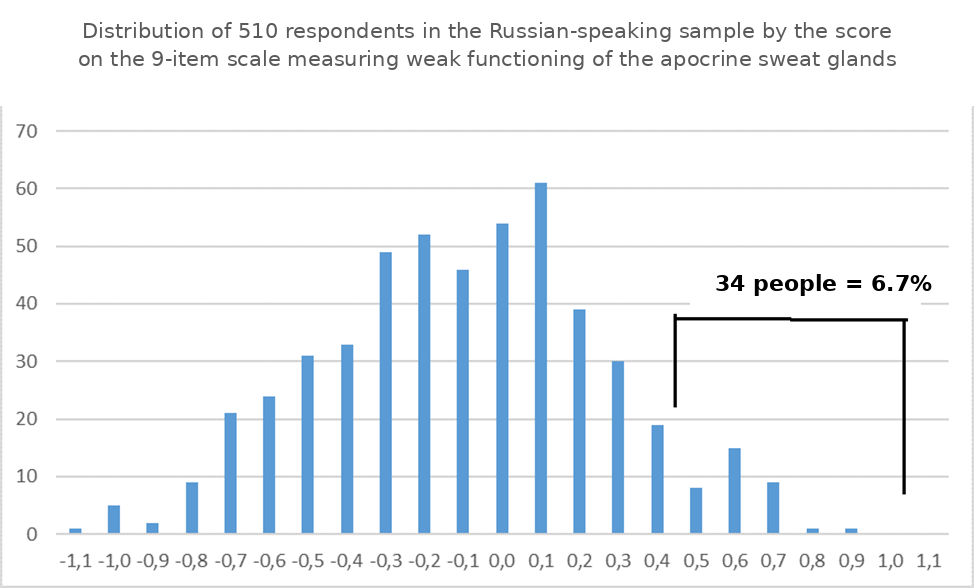
In order not to rely solely on mathematical calculations indicating the need to numerically correct the correlations obtained for individual items upward by a factor of 1,7, we also conducted a direct experiment measuring (in a sample of 510 people) the correlation between, on the one hand, a complete purely psychological factor constructed for each subject on the basis of their trait profile and having direction cosines equal in magnitude to the coefficients of the trait profile of the Asian allele of the ABCC11 gene (see Fig. 1), and, on the other hand - the sum of each respondent’s answers to 9 marker items directly diagnosing the Asian allele of the gene exclusively on the basis of reduced sweating in the auditory canal and underarm area (9 items from the list of 11 items presented at the beginning of the article, excluding items Nos. 3 and 4).
For the scale composed of 9 items on intra-aural and underarm sweating, the correlations should be higher than for each of its diagnostic items individually. This is because the proportional contribution of a random factor to the scale score decreases rapidly as the number of scale items increases (a fact mathematically derived and well known from the mathematical statistics of questionnaires).
As a result, the linear empirical correlation between these two variables in a sample of 510 people was 0,448, corresponding to a shared variance between the variables of =20%. Thus, the calculations presented in the previous section for the variance of psychological properties associated with the ABCC11 gene (based on mathematical statistical modeling) were fully confirmed in a direct experiment.
For the integral psychological factor whose direction in psychological space coincides with the direction cosines of the trait profile of the Asian allele of the ABCC11 gene, it follows that the biological variation in versions of the ABCC11 gene itself accounts for at least 20% of the variance of this psychological factor. If, however, oblique projections of this factor onto its individual psychological clusters positively correlated with the complete factor are taken (such as reduced predisposition to depression, industriousness, reduced aggressiveness, etc.), then for each such psychological cluster, variation in the ABCC11 gene accounts for no less than 3% of the cluster variance (which, as is known, are very high values for a single gene). Moreover, it is possible that in a direct genetic experiment, where proximity to different gene alleles is measured directly by genetic methods rather than by the physiological manifestations of the alleles, the variance of the corresponding psychological properties linked to the gene will prove even higher.
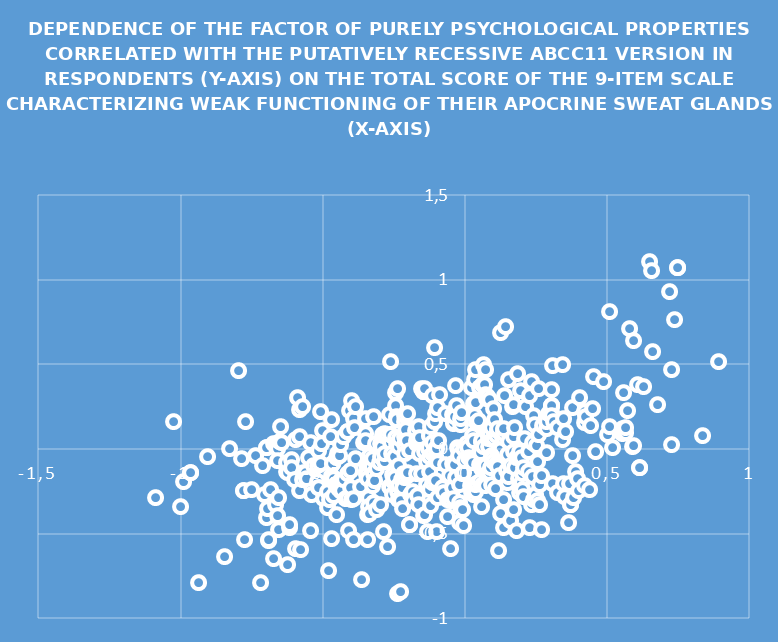
On the right side of the graph, the approximating line of mean Y values bends sharply upward, indicating the presence of a phase jump for the rightmost group of thirty points (for most points in this group of thirty, a diploid set of recessive gene alleles should be assumed, whereas to its left are the points of respondents either with a haploid set of two different alleles or with a diploid set of dominant alleles – the two groups differ little in either their physiological or psychological properties, because in both cases the functional dominant allele is dominant).
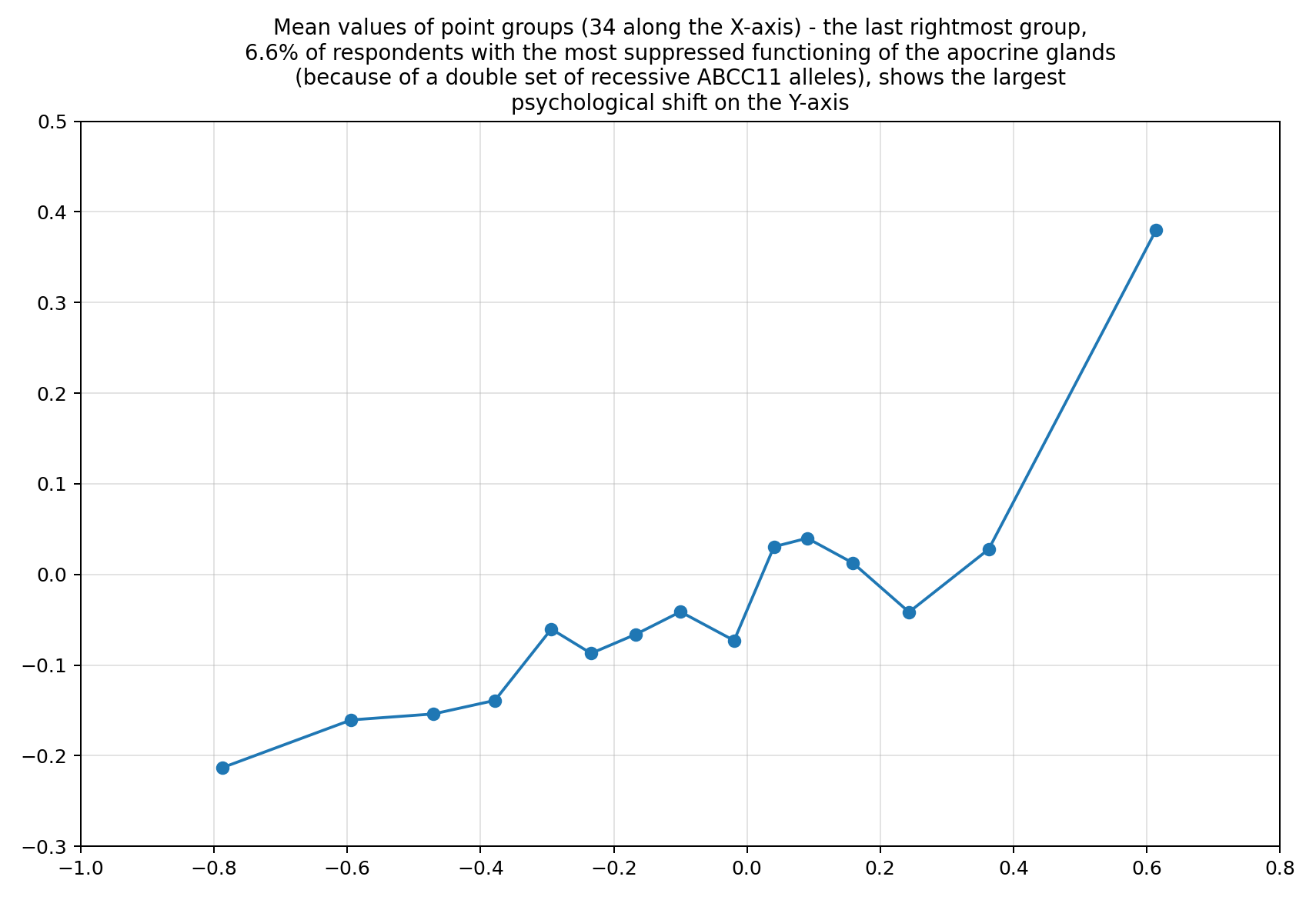
The increase in psychological properties characterizing the differences between people with low sweating in the ears and underarm area and people with high sweating increases by only 0,23 over the entire range of the first 14 groups of subjects, whereas from the 14th group to the 15th it increases immediately by 0,35. Obviously, this indicates a new quality that appears abruptly in the subjects of the final, 15th group – namely, the appearance among its members of a double, diploid set of ABCC11 gene alleles.
QUALITATIVE CONCLUSIONS ABOUT THE PSYCHOLOGICAL DIFFERENCES BETWEEN THE TWO ALLELES OF THE ABCC11 GENE
Thus, the Asian version of the ABCC11 gene reduces in its carriers (including – in Japan, China, and Korea) predisposition to depression and aggressive manifestations, reduces the need for everyday comforts, but at the same time increases responsibility and readiness for collective cooperation, intensifies workaholism, and also increases intolerance of injustice. The main essence of the psychological influence of the Asian allele of this gene is an increase in industriousness against a background of low demands for everyday comforts and a good, benevolent mood devoid of hysterical and depressive traits.
The analysis of the tables in Figure 1 given above is readily understandable and clear only to people thoroughly familiar with modern socionics, its terminology, and the content of the factors forming its multidimensional psychological space (that is, the so-called “socionic traits”). To make the conclusions obvious and understandable to everyone, rather than only to people familiar with the modern socionic paradigm of the psychology of individual differences, we additionally provide a list of questionnaire items whose direct content is in no way related to sweating in the underarm area and auditory canal (that is, not related to the scientifically known manifestations of different versions of the ABCC11 gene), but which nevertheless have the highest covariances (and correlations) of their type profiles with the profiles of the Asian version of the gene presented in Fig. 1.
Here is the list of these items, selected from 9600 questionnaire items (with known socionic factor profiles) exclusively according to the principle of maximum covariance of their profiles with the psychological profiles of the ABCC11 gene presented in Figure 1:
ITEMS WITH HIGH POSITIVE COVARIANCE, THAT IS, CHARACTERIZING THE PSYCHOLOGICAL MANIFESTATIONS OF THE ASIAN VERSION OF THE GENE:
- I believe that a genuine feeling for a person is only one that has been tested over a long period of time.
- I more often see the good in other people than the bad.
- My mood is almost always dominated by a bright euphoria, while bilious skepticism is practically never present.
- I prefer paintings in bright and contrasting colors.
- It is true that I very rarely have a prolonged sad or depressed mood.
- I have even, deep, and restful sleep with rare or absent dreams.
- I see nothing wrong with every person being strongly dependent on society.
- I am interested in the structure of the state and its electoral system.
- I can adapt to any living conditions, even difficult and challenging ones – and even under them I can enjoy life.
- More than 95 percent of the time I am unwaveringly confident and calm, knowing no fears.
- In the morning, as a rule, I have a background of good, calm, bright, and trouble-free mood (corresponding to the rays of the morning sun), which lasts for several hours or longer.
- As a rule, I am aware of my own importance, significance, and authority.
- As a rule, I have an even, confident, calm, and optimistic mood.
- Compared with other people, there is always room in my mind to listen to and consider objections - I never become “fixated” on my ideas and my own correctness, and I never become a “fanatic.”
- I live by reason and calculation more than by the heart, while logic and order are my defense against insolent people.
- Key words for me: algorithm, program, dry analysis of facts.
- Logic always helps me make my picture of the world clear and structured, so that I can subsequently be guided by general principles and ideas while ignoring details.
- In everyday life, I can make do with the minimum for a long time.
- In computer games, I prefer unhurried “intelligent” games - chess, checkers, backgammon, simple games such as “Minesweeper,” etc.
- In any of its manifestations, I try to expend only the minimum effort on the material world - no more than is necessary to create a positive emotional effect on those around me.
- It is true that I never point out people’s shortcomings to them.
- I have a thin, elongated figure.
- I tolerate insect bites and all kinds of wounds, injections, and scratches very poorly and painfully.
- Without difficulty (without irritation at such a task), and even with pleasure, I can recount, in strict sequence, hour by hour, what I did yesterday in order - beginning with waking up in the morning and ending late in the evening.
- In life I can be compared to a steam locomotive that has picked up speed and is rushing into the distance - I am always in working motion and am not easy to stop.
- I almost always “hide” from a bad mood in intensive work at the limit of my abilities.
- Any manifestations of laziness, lying, cruelty, and injustice in people invariably repel me.
- I cannot tolerate idle pastimes, because of which I do not relax even while resting.
- I like working out technologies and bringing them to maximum efficiency.
- I am calculating and consistent in how I use my time.
- Compared with others, my movements are more abrupt (in small jerks, jumps) than smooth.
- I can work for a long time without fatigue, correctly distributing my tasks over time.
- I am demanding and uncompromising, work very hard, and despise lazy people.
- I constantly experience time as the most important resource and deliberately rationalize and plan its use.
- More than others, I try to be informed and competent; in conversation I rely only on facts, I like clarity and precision in everything, and I do not forgive unreliability.
- Key concepts for me: activity, industriousness, work organization, management, constant improvement of efficiency, improvement of technologies, planning, politeness, busyness, technological sophistication and well-adjusted work operations, punctuality, formality, stability, concern for health.
- It is typical of me that I am a person of my word; I value justice in everything and reasonable order based on it.
- By nature I am a “workaholic.”
- In many matters I am an extremely pedantic person.
- I have a high capacity for work, which is constantly sustained by a sense of responsibility.
- Key concepts for me: administration, care, a healthy body, energy, benefit, minimization of losses, organization, production, dynamism, professionalism, competence, practicality, best quality, presenting goods attractively, consistency, order, stability.
- The main traits of my character are discipline, systematic planning, methodicalness, rigidity, and adherence to precision and order.
- I strongly identify with the saying: “there is a time for work and an hour for fun.”
- My life and career are clearly laid out in stages.
- It is characteristic of me that I like to rationalize work.
- I am better organized than the average person in my circle and have better self-control.
- I am a “workaholic.”
- I am a very purposeful and organized person.
- In the morning I can always list exactly which tasks I have planned for today.
- I plan time as a linear sequence of necessary actions - and scrupulously adhere to it.
- I react painfully to any incompleteness in tasks.
- Key words for me - diligence in execution, timeliness, accuracy, justice, and active industriousness.
- Key concepts for me: regulations, discipline, compliance with instructions.
- I have the habit of always finishing what I start.
- My strength is that my actions are always systematic, constant, and regular.
- I like cohesion and organization in everything; I cannot tolerate uncertainty, improvisation, deviations, or lack of uniformity.
- I am a person who is more organized than impulsive.
- I am committed to regularity, systematicity, and discipline.
- I always have an action plan for tomorrow in my head.
- Compared with others, I am excessively diligent and disciplined.
- I usually have quick thinking, heightened perception, and high self-esteem with a sense that any problems can be solved.
- My strong side is businesslike efficiency, energy, and persistence.
- I am an optimist; it is difficult to spoil my good mood.
- In drawing my portrait, one could say that I am optimistic, friendly, active, enterprising, very inventive, and always have distant goals before me.
ITEMS WITH SHARPLY PRONOUNCED NEGATIVE COVARIANCE, THAT IS, CHARACTERIZING THE PSYCHOLOGICAL MANIFESTATIONS OF THE EUROPEAN VERSION OF THE GENE:
- My sensations can be intrusive and often interfere with me.
- I am often angry and grumpy.
- First and foremost, I always clearly see everything that makes people not similar but different, that separates and distinguishes them from one another.
- I admit that I often capriciously and unfairly shout and swear at those close to me - this is wrong for me, and that is not right either.
- It is easy to make me irritated and put me in a bad mood.
- In the sound of an orchestra, I can easily single out one particular instrument and concentrate on perceiving its part without hearing all the others.
- If I like some thing, I must have it almost immediately.
- My fantasies most often have a plot developed over time - they resemble a film or theatrical scenes.
- My dreams are usually filled with feelings and emotional experiences that I experience while dreaming.
- The world is ruled by powerful passions and feelings, and they are usually stronger than rationality and stronger than us.
- I am highly susceptible to the influence of emotions and feelings.
- Various physical discomforts (for example, tight clothing, smells, hangnails, an unsuitable room temperature, uncomfortable light, hunger, etc., etc.) usually distract me greatly and interfere with my work.
- A bad mood arises easily for me and can last for several days.
- Most people are scoundrels.
- Compared with the average human level, I have no less egoism (and sometimes more).
- I believe that the world was, is, and should be an arena of eternal struggle in which there is no justice and can be no justice, and the strongest always win, while a person of average strength, like me, must survive by skillfully maneuvering among the strong, that is, by knowing how to “run between the streams.”
- Sometimes I feel like destroying something belonging to someone - just like that, out of spite.
- I keenly notice the weaknesses and mistakes of those around me and do not miss an opportunity to “take a swipe” at them for it.
- My attitude toward people is more often hostile than kind.
- I spend a considerable part of my time drifting in an unending smooth stream of sensations.
- I think my biological instincts are more strongly expressed than those of other people.
- Every day of mine is filled with the pursuit of pleasures and a feeling of enjoyment received.
- How I spend my time depends on the situation, not on a plan.
- A daily schedule and I are incompatible things.
- The necessity of planning my day is completely alien and repugnant to me.
- I am poorly organized and cannot tolerate any control.
- I am sometimes carelessly irresponsible.
- I have a habit of postponing tasks and often do not finish them.
- I do not like forcing myself or putting myself within the constraints of any plans or schedules.
- Unless there is an urgent necessity, I never make lists of tasks; I prefer to do what I feel like doing at the moment, whatever comes into my head.
- Very often I devote my time and interests to whatever happens to come to hand at the moment rather than to what is planned and necessary.
- I do not like people for whom everything is clear and everything is scheduled - that is alien to me.
- I often stop halfway through almost any task, becoming distracted by something else.
- I live by my sensations and do not like forcing myself or putting myself within the constraints of any plans or schedules.
- My capacity for work is very uneven; unpredictable declines and rises are typical of it.
- In my behavior, I am often imprudent.
- My capacity for work is very uneven; poorly predictable declines and rises are typical of it.
- What I manage to do in an hour is always determined by my mood, well-being, or something else, but never by what the clock says.
- Sometimes (not all that rarely) I am recklessly lazy.
- I am lazier, more sensitive, and more pleasure-seeking than many others.
- My emotions and experiences are very unstable and easily change their sign (from minus to plus and vice versa).
- Sometimes it is difficult to remember current events - while they are happening, I orient myself in them clearly, but when everything is over, I remember it as if through a fog, like a past dream.
- My worldview fully corresponds to the sayings “There is no defense against a crowbar,” “Do not get caught,” and “Not caught - not a thief.”
- I quite often have colorful dreams with fairy-tale, fantastic plots.
- Being an ethnographer or architect-designer by profession would suit me better than being a programmer or teacher.
- For the amusement of the people, I would permit gladiatorial combats with fatal outcomes.
- People are shit; I often want to kill them all or myself.
- I often have sad states in which everything suddenly begins to seem hopeless.
- I am tormented by a depressed mood (melancholy thoughts, everything seems rather bleak and hopeless, I do not want to do anything).
- Sometimes it is difficult for me to emerge from a state of thoughtlessness and lazy contemplation.
- I spend the greatest part of my free time at home in an armchair or on a sofa.
- I am often in a state of inactive depression.
- I often have a sad mood.
- I am often tormented by apathy (an unwillingness to move) with loss of interest in everything.
Thus, from analysis of the list of items correlated with the gene profile, we see that the Asian version of the gene is associated with an increase in Logic (as opposed to Emotionality in the European version of the gene), with increased industriousness, responsibility, self-control, stable good mood, low demands in everyday life, life activity, and a positive attitude toward people.
COMPARISON OF THE RESULTS WITH PREVIOUSLY KNOWN INDEPENDENT FACTS:
Now let us check whether the psychological differences we identified between carriers of the dominant and recessive alleles of the ABCC11 gene coincide with data from other sources that directly analyze psychological differences between the populations of European countries and those countries of Southeast Asia where the recessive version of the ABCC11 gene is widespread (for example, Japan, China, Singapore, and South Korea).
For these countries, we found statistics on the number of cases of manifested clinical depression per 100000 population, as well as statistics characterizing the level of aggression by the number of homicides per 100000 population (see Bloomberg: Ranking of the Countries of the World Whose Residents Suffer Most from Stress and Depression in 2013. [Electronic resource] // Center for Humanitarian Technologies. — 19.07.2013. 18:50. URL: https://gtmarket.ru/news/2013/07/19/6112).
REDUCED AGGRESSION
Homicide statistics obviously depend not only on genetic factors but also on socioeconomic factors. Fortunately, the levels of the main socioeconomic factors influencing the growth of aggression in society are presented in detail for 84 countries of the world in the aforementioned Bloomberg table, which makes it possible to mathematically calculate and completely eliminate from the homicide statistics their correlational dependence on all socioeconomic factors without exception (population income, inequality in income distribution, unemployment rate, level of perceived corruption). What remains after this is already maximally close to the influence on aggressiveness of purely biological, genetic factors that specifically affect differences in the psychology of peoples. Thus, after correlations with socioeconomic factors are eliminated, the three Asian countries of interest to us – Japan, China, and Singapore – occupy the first three rows of the table with the lowest homicide rates per capita. South Korea is closer to the middle of the ranking, but still in its first half. The highest number of homicides per capita (again after completely excluding the influence of socioeconomic factors on this indicator) occurs in Latin American countries. Following Latin America, three quarters of African countries and half of European countries, including Russia, are in the zone above the average number of homicides per capita.
LOW PREDISPOSITION TO DEPRESSION
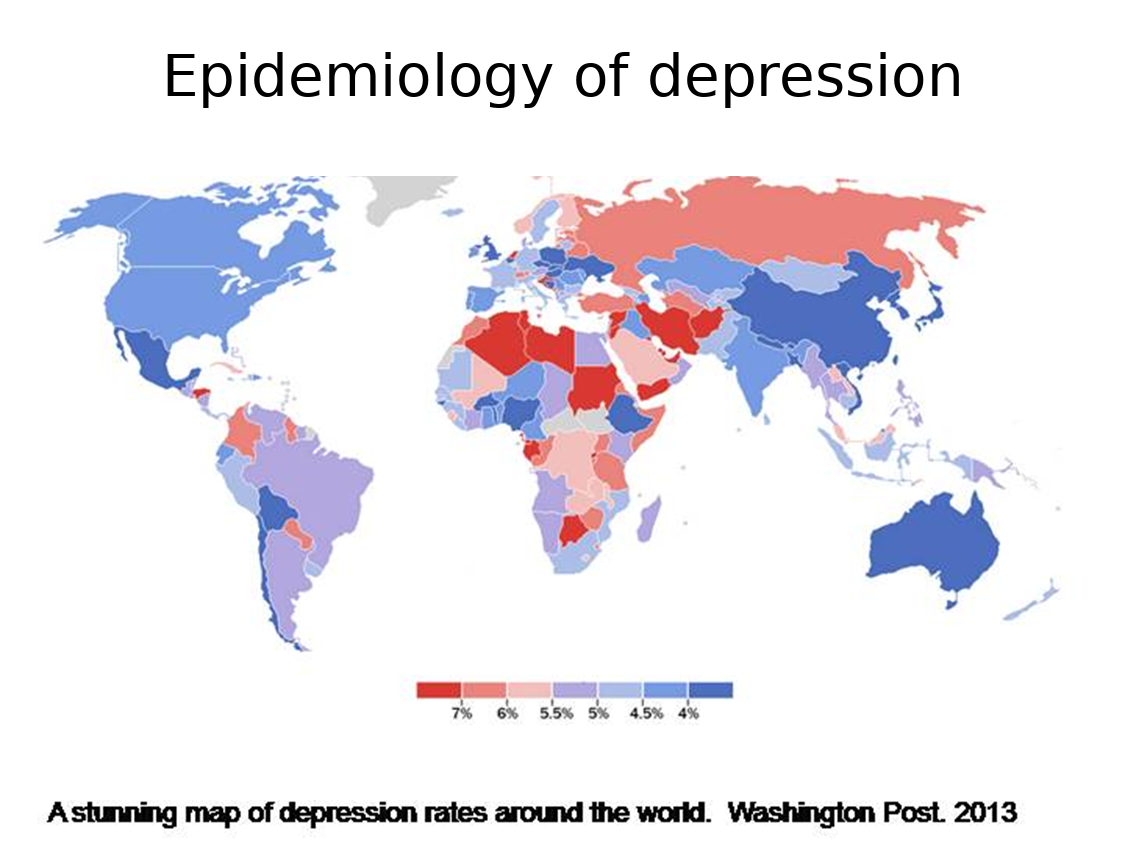
As for statistics on depressive disorders, according to WHO data (https://yandex.ru/turbo?text=https%3A%2F%2Filive.com.ua%2Fhealth%2Frasprostranennost-i-statistika-depressii-v-raznyh-stranah-mira_108809i15956.html&d=1), as well as 2013 statistics from the Washington Post (see figure - https://media.informpskov.ru/pictures/1384071123.jpg, https://media.informpskov.ru/pictures/1384071123.jpg), they occur in Japan, China, Vietnam, Singapore, and South Korea almost twice as rarely as in Europe; the comparison with Russia is especially striking (see the map of depressive-disorder statistics in the attached figure).

INDUSTRIOUSNESS
Everyone has also heard about the industriousness of the inhabitants of Southeast Asia – it is confirmed both by direct observations of tourists (including the author of these lines) and by the well-known economic successes of the “East Asian tiger” countries.
LOW DEMANDS FOR EVERYDAY COMFORTS (a consequence of the reduction in psychological profiles of the so-called “introverted sensing (Si),” responsible, among other things, for the need for comfort)
The low demands for everyday comforts of Koreans and Chinese (on average in comparison with other peoples) are very well known. Until now it was generally believed that this was supposedly their historical ethnocultural trait, but the results of the present work make it possible to attribute this difference to genetic causes.
LOWER EMOTIONALITY ON AVERAGE
It is known that, in terms of their average level, Chinese and Japanese people are emotionally more restrained than Europeans (even those from northern countries); it is difficult to stir them into openly expressing emotions. One clear confirmation of this fact – in Chinese discos, in order to “stir up” members of the local public into more lively and uninhibited behavior (otherwise they may spend the entire evening standing against the wall), European tourists are even specially recruited, with not only entry to the disco (together with drinks) made completely free for them, but even extra payment provided for the evening spent at the establishment.
GREATER SUCCESS IN SOLVING INTELLECTUAL TASKS
The complete socionic profiles of low sweating corresponding to the Asian version of the ABCC11 gene partially coincide with the socionic profiles of success on the Amthauer intelligence test (see the corresponding article by V. Talanov at http://otkroysebya.ru/socionic_IST_RMET.docx). The linear correlation between these profiles is positive and equals 0,42 (a sufficiently large value to allow the assumption that the Asian version of the ABCC11 gene also has a positive influence on a person’s success in performing intelligence tests). What do we know about direct comparative studies of the intelligence of Europeans and people originating from Southeast Asia? Such studies have been conducted, and more than once. In particular, they have been conducted on students at American colleges who share the same culture but have different ethnic origins. In all cases, the results showed an average advantage of Asians of approximately 6 IQ points. Thus, this prediction from the results of our study is also confirmed by independent data.
ON POSSIBLE CRITICISM OF THE RESULTS OBTAINED
Can one, on the basis of the facts presented, already state unequivocally that allelic variation in the ABCC11 gene exerts a very strong influence on psychological differences among its carriers? We believe that one can. The only alternative that could explain the obtained results differently is the unlikely assumption that most respondents who reported low sweating in their ears and underarm area were ethnic Asians in our study. In that case, the overall shift in psychological profiles might be attributable not specifically to the ABCC11 gene but to variation in some other genes, one of whose alleles is also tightly linked to the East Asian population. But, first, there are not very many such known genes, and, for example, for the lactose-sensitivity gene we have tested and demonstrated the absence of differences in psychological profiles between its alleles. Second, we personally know a number of respondents who reported low sweating, and among them there is not a single ethnic Chinese, Korean, Japanese, Buryat, Yakut, or Tuvan (if they have Asian ancestors at all, they are somewhere among third-generation ancestors). Finally, the very presence of a substantial number of people of purely East Asian origin in a Russian-speaking Internet sample of socionics enthusiasts (the anonymous Internet study was conducted on precisely this sample) is unlikely.
But in any case, a direct test of the association between the strong psychological trends identified and the alleles of the ABCC11 gene within an actual genetic study is advisable. If researchers who have such an opportunity become interested in the results obtained, we can provide them for their work with a specially developed psychological scale consisting of several dozen items, which, on the basis of a special mathematical algorithm, ideally quantifies both the complete complex psychological shift in the direction of the maximum gradient of psychological differences between ABCC11 alleles and its individual clusters (projections) – in particular, those associated with reduced aggressiveness, reduced predisposition to depression, increased industriousness, reduced emotionality, etc.
Incidentally, in Russia the principal carriers of the Asian recessive allele of the ABCC11 gene are indigenous peoples living near the borders of China and Mongolia, including Buryats, Yakuts, and Tuvans.
REFERENCES TO THE MAIN LITERATURE ON THE TOPIC:
- Anna Sokolova. The ABCC11 Gene (electronic resource, brief review article: https://www.genokarta.ru/gene/ABCC11)
- Matsunaga E. The dimorphism in human normal cerumen. Annals of Human Genetics. 1962 May;25: 273-286.
- Tomita H, Yamada K, Ghadami M, Ogura T, Yanai Y, Nakatomi K, Sadamatsu M, Masui A, Kato N, Niikawa N. Mapping of the wet/dry earwax locus to the pericentromeric region of chromosome 16. Lancet 2002 Jun;359: 2000-2002.
- Tammur J, Prades C, Arnould I, Rzhetsky A, Hutchinson A, Adachi M, Schuetz J D, Swoboda K J, Ptacek L J, Rosier M, Dean M, Allikmets R. Two new genes from the human ATP-binding cassette transporter superfamily, ABCC11 and ABCC12, tandemly duplicated on chromosome 16q12. Gene 2001 25;273: 89-96.
- Yoshiura K, Kinoshita A, Ishida T, Ninokata A, Ishikawa T, Kaname T, Bannai M, Tokunaga K, Sonoda S, Komaki R, Ihara M, Saenko VA, Alipov GK, Sekine I, Komatsu K, Takahashi H, Nakashima M, Sosonkina N, Mapendano CK, Ghadami M, Nomura M, Liang DS, Miwa N, Kim DK, Garidkhuu A, Natsume N, Ohta T, Tomita H, Kaneko A, Kikuchi M, Russomando G, Hirayama K, Ishibashi M, Takahashi A, Saitou N, Murray JC, Saito S, Nakamura Y, Niikawa N.. A SNP in the ABCC11 gene is the determinant of human earwax type. Nature Genetics 2006 Mar;38: 324-330.
- Martin A1, Saathoff M, Kuhn F, Max H, Terstegen L, Natsch A. A functional ABCC11 allele is essential in the biochemical formation of human axillary odor. J Invest Dermatol. 2010 Feb;130(2):529-40.
- Petrakis NL, Ernster VL, Sacks ST, King EB, Schweitzer RJ, Hunt TK, King MC. Epidemiology of breast secretion: Association with breast cancer risk factors and cerumen type.J Natl Cancer Inst. 1981 Aug;67(2):277-84.
- Lang T, Justenhoven C, Winter S, Baisch C, Hamann U, Harth V, Ko YD, Rabstein S, Spickenheuer A, Pesch B, Brüning T, Schwab M, Brauch H.. 2011. The earwax-associated SNP c.538G>A (G180R) in ABCC11 is not associated with breast cancer risk in Europeans. Breast Cancer Res Treat. 2011 Oct;129(3):993-9.
- Beesley J, Johnatty SE, Chen X, Spurdle AB, Peterlongo P, Barile M, Pensotti V, Manoukian S, Radice P; Australian Ovarian Cancer Study Group; Kathleen Cuningham Consortium for Research in Familial Breast Cancer, Chenevix-Trench G. No evidence for an association between the earwax-associated polymorphism in ABCC11 and breast cancer risk in Caucasian women. Breast Cancer Res Treat. 2011 Feb;126(1):235-9.
- Ishikawa T, Toyoda Y, Yoshiura K, Niikawa N. Pharmacogenetics of human ABC transporter ABCC11: new insights into apocrine gland growth and metabolite secretion. Front Genet. 2013 Jan 2;3:306.
- Miura KK, Yoshiura S, Miura T, Shimada K, Yamasaki A, Yoshida D, Nakayama Y, Shibata N, Niikawa H, Masuzaki. 2007. A strong association between human earwax-type and apocrine colostrum secretion from the mammary gland. Human Genetics 121: 631-633.
- Yoshiura K1, Kinoshita A, Ishida T, Ninokata A, Ishikawa T, Kaname T, Bannai M, Tokunaga K, Sonoda S, Komaki R, Ihara M, Saenko VA, Alipov GK, Sekine I, Komatsu K, Takahashi H, Nakashima M, Sosonkina N, Mapendano CK, Ghadami M, Nomura M, Liang DS, Miwa N, Kim DK, Garidkhuu A, Natsume N, Ohta T, Tomita H, Kaneko A, Kikuchi M, Russomando G, Hirayama K, Ishibashi M, Takahashi A, Saitou N, Murray JC, Saito S, Nakamura Y, Niikawa N. A SNP in the ABCC11 gene is the determinant of human earwax type. Nature Genet. 38: 324-330, 2006.
- Rothardt G, Beier K. Peroxisomes in the apocrine sweat glands of the human axilla and their putative role in pheromone production. Cellular and Molecular Life Sciences. 2001;58(9):1344–1349.
- Stern K, McClintock MK. Regulation of ovulation by human pheromones. Nature. 1998;392(6672):177–179.
- Toyoda Y, Gomi T, Nakagawa H, Nagakura M, Ishikawa T. Diagnosis of human axillary osmidrosis by genotyping of the human ABCC11 gene: clinical practice and basic scientific evidence. Biomed Res Int. 2016
- Toyoda Y, Sakurai A, Mitani Y, Nakashima M, Yoshiura K, Nakagawa H, Sakai Y, Ota I, Lezhava A, Hayashizaki Y, Niikawa N, Ishikawa T (Jun 2009). “Earwax, osmidrosis, and breast cancer: why does one SNP (538G>A) in the human ABC transporter ABCC11 gene determine earwax type?”. FASEB Journal. 23 (6): 2001–13. doi:10.1096/fj.09-129098. PMID 19383836
Author: Viktor Lvovich Talanov (contact with the author through the public page https://vk.com/club168821911)
Publication date: 03 October 2019, Saint Petersburg
Address for downloading the article in Word format: http://otkroysebya.ru/ABCC11.docx
copyleft V. L. Talanov 2019
The author permits free reproduction and quotation of the article provided that a hyperlink or URL link to this original source is included.