Internal Information Metabolism and the Physical Mechanisms of Its Functioning
Introduction
With this text I continue a series of earlier works [9, 10, 11] devoted to the neurophysiological basis of socionics. However, before proceeding to the substance of the matter, several general theoretical remarks will have to be made.
They concern the problem of reducing psychological phenomena to specific neurophysiological mechanisms. In general terms, the problem is as follows: suppose psychologists have identified certain phenomena in human behavior (for example, the operation of socionic functions) and have learned to recognize them. But does this mean that each phenomenon must correspond to its own, special neurophysiological mechanism (or brain system)? Not at all. The concepts and categories within which we describe the psyche are often introduced purely speculatively, as reflections of philosophical or everyday psychological concepts that happened to be available to the authors. Of course, some connections between the psychological and the neurophysiological undoubtedly exist, and science, although slowly, is advancing quite productively into this domain of knowledge. But the results, as a rule, take the form not of direct connections, but rather of statistical correlations (“75% of patients with damage to this cortical area exhibit such-and-such impairments”). Moreover, because of the plasticity of the psyche and the excessively general nature of most test tasks, the same task can often be solved through the operation of entirely different brain systems.
For illustration, consider the following analogy. Suppose we observe flights of aircraft of different types and note that they maneuver and behave differently. For example, we observe the presence and quantitative predominance of different aerobatic maneuvers (barrel roll, Immelmann, Nesterov loop, etc.), and on this basis we “type” the aircraft. So, how are our aerobatic maneuvers related to the construction of the aircraft? There is certainly some relationship: some maneuvers require a high thrust-to-weight ratio, others maneuverability, still others stability of flight at high angles of attack (or, conversely, dynamic instability in flight); some require thrust-vector deflection. But no matter how thoroughly we study and disassemble the aircraft, it is impossible to identify within it separate systems, each of which is individually responsible for the Immelmann, the Nesterov loop, and so forth. The same control organs (aerodynamic control surfaces) are involved in all maneuvers; the difference is “merely” in their joint action in a particular combination and degree. And other factors will also be mixed into our “typing,” including pilot training and instruction (an analogue of learning/training and the conscious choice of functions in socionics). Continuing the analogy with the psyche, the pilot is consciousness, while the engine and the aircraft’s control organs are the physiological basis, the fundamental mechanisms for implementing all functions. But here one can distinguish another, intermediate level, the parameters of the control system (including the autopilot; for example, restrictions introduced by designers and operators in order to prevent certain risky maneuvers that are nevertheless entirely possible for the given aircraft). At this level, the parameters determine to what extent and in what manner the aircraft’s control organs should operate during maneuvering. For example, in the Yak-130 advanced trainer/light combat aircraft, changing the parameters of the control system can simulate flight on other, different types of fighter aircraft.
An example from another domain. How do the structures of high-level computer languages relate to processor architecture (and also to low-level machine language)? Again, there is a relationship, but it is not one-to-one. Conditional branches, loops, and data structures are implemented by particular processor instructions with particular methods of memory addressing. But the correspondence between the “hardware” and “software” levels (as well as between machine and high-level languages) also has many degrees of freedom. Different machine code can be obtained from the same “high-level” program; this depends primarily on the parameters (options) of the compiler (an analogue of the control-system parameters in the preceding example; they determine, for example, the memory model and method of memory addressing).
What these examples have in common is that the correspondence between the “upper” and “lower” levels is mediated and can vary (be configured) within certain limits. The upper level unquestionably uses the structures of the lower level as fundamental resources. It cannot operate without them; they are necessary. In addition, lower-level resources are specific, that is, limited in their application; they cannot be used in just any way. But! – they are not completely specific. They can be used, although not arbitrarily, to different degrees and in different capacities. The latter is determined by the intermediate (transmission) level – the parameters of the control system (or compiler).
Let us now return to our subject, that is, to psychological phenomena and socionic functions in particular. Different brain systems and resources generally have a basic behavioral purpose, as a rule already studied by neuropsychology and cognitive neuroscience. V. Talanov has already extensively mapped them onto socionic traits and functions [14, 16, 17, 18]. But I believe that these are precisely the fundamental, most “low-level” resources, and describing them is only half of the solution to the problem. I believe that between the upper level (behavior) and the lower level (specific brain structures) there is an intermediate, transmission level at which the integration and mutual regulation of the specific lower-level systems and resources takes place.
Moreover, one can advance a much stronger hypothesis, asserting that the socionic personality type is determined not by the basic brain systems (as Talanov believes), but specifically by the intermediate/transmission level of integration of the basic systems. Admittedly, this assertion depends to a greater extent on what exactly we mean by a person’s type of information metabolism (TIM) and, more specifically, by information metabolism – that is, on the convention used to define a sociotype. Unfortunately, this question in socionics is currently either passed over in silence or talked around, but is not resolved constructively. Therefore, this choice also has to be argued here: the concept of information metabolism can (and even should!) be tied to the intermediate level of integration/regulation of functional systems (the socionic functions themselves can be mapped quite well onto these systems, as both Talanov and I have done in [7, 8, 10]).
In principle, all brain subsystems operate in parallel, and socionic functions in their basic form are no exception. Moreover, the TIM, regardless of the base function, also affects everything: the expression of emotions, style of movement, speech vocabulary, sensory perception, inclination toward one or another type of thinking – none of the functions is switched off, but all of them are modified. Consequently, the level of (internal) information metabolism is a superstructure over all functions, modifying the parameters of their operation and establishing the order of their interaction (for example, the motivational connections and blocks described in [9]), rather than simply the dominance of the base function over all the others (in fact, the dominant focus in the brain is variable and switches as the situation unfolds).
Previously I assumed that socionic type is determined by the asymmetry of important intercenter connections in the brain – first attributing this to thalamocortical connections [9], and later to connections of the prefrontal cortex with other areas [10, 11]. In principle, asymmetry of connections is a sufficiently general (and, incidentally, still requiring further clarification) principle for implementing the intermediate level of regulation indicated above. Below I will describe the operation of another extremely important integrating brain structure that provides a connection between the prefrontal cortex (where the “multidimensional” executive centers are located; see [10, 11]) and the posterior “perceptual” regions of the brain. This is the so-called precuneus.
Let us note a very important feature of the indicated structures of the “transmission” level, in our interpretation: all of them are evolutionarily young and are disproportionately developed in humans (and somewhat less so in other higher primates) compared with other mammals. These include the association thalamus, prefrontal executive centers, the parietotemporal region (the angular and supramarginal gyri and the adjacent Wernicke area responsible for speech), and, finally, the precuneus. These areas belong to the tertiary association cortex, are not connected with specific analyzers, and perform higher-order integration of information from all specific areas. They enable the brain not merely to process information, but to do so under increasingly voluntary control, including transferring some tasks to functions that “originally” had an entirely different purpose (in [7, 9] I showed this for function blocks). In this way, flows of information and activation between the “old” specific brain systems are intensified, with those systems already being used as mobile resources with respect to tasks. In [9] I proposed that it is precisely this exchange of information/activation that underlies the concept of “information metabolism.”
From an evolutionary standpoint, the development of these structures was most likely driven by the intensification of sociality in the primate evolutionary lineage. Beginning with the higher apes, sociality becomes total [21] in two senses at once. First, individuals are constantly involved in communication (in other species, acts and periods of signaling communication – territorial conflicts, courtship displays – alternate with periods of “asociality,” when individuals interact minimally). Second, almost all behavior becomes potentially signaling and social, unlike in other species, where there is a clear division between “social signals” and utilitarian actions – feeding, grooming, fleeing, and so forth. When I outlined the ethological basis of socionic functions in [7], I had precisely their “old” purpose in mind (in particular, the basis of rational functions has a social-signaling purpose, unlike “utilitarian” sensing). At their basis, the functions are generally self-sufficient and do not especially require an integrating superstructure, and relatively simple animal behavior does not require such integration either: each task has its own action program, and functions can operate quite separately, according to the principle of the dominant focus. Under conditions of human “total sociality,” however, everything changes dramatically. For example, an ethical attitude can be expressed not only through standard emotional expressions, but through all functions in general, by the most varied means; the attitude itself can extend not only to individuals from one’s own group, but to all manner of objects, including inanimate ones. That is, the ethical function in humans is not only its basis (inherited from animal ancestors, although greatly improved), but a complex interaction interface between the basis (“old” ethics) and all the other functions, allowing basic ethics to use their capabilities for its own purposes; the same applies to the other functions. Therefore, the decisive role here is played by the integrating (transmission) level, not by the basis.
Finally, total sociality also implies a total exchange of signals among individuals within a group, a constant flow of information from outside. This is external, social information metabolism, which inevitably generates its reflection within the psyche – complex models of the theory of mind type. Generally speaking, human intellect develops (according to L. S. Vygotsky) from the social to the individual; therefore, functions in their new, integrated form should be considered primarily in social terms, as means of communication and of influencing the behavior of other individuals, and only secondarily as an instrument of individual thinking, evaluation, and perception of a situation. In other words, in socionics the social level of personality type is primary; the intellectual level arises as an adaptation of “social” functions to the solution of nonsocial tasks, while the physical level arises because the body is involved in communication between individuals (the first signaling system). In socionics, however, the reverse approach currently predominates – describing functions primarily in terms of instrumental intellect and only then in terms of social action. In our view, this is an error (not a fatal one for socionics, admittedly, but an error nonetheless), and it should be corrected.
Background Thinking Network
In neuroscience there is the concept of the default network (or default mode network, default system [23]). This term denotes a network of cortical brain areas active during relaxed wakefulness, when a person is not focused on the external world or on solving external tasks (the term task-negative network, TNN, is sometimes used). When a person solves a specific task, this brain system is deactivated and another network is activated (task-positive network, TPN; these two networks can also be regarded as components of a single default network). There is not yet an established Russian translation of this term; in my view, the best option would be background thinking network, or background thinking system (SFM), but here I will use the English abbreviation DN.
DN activity is credited with maintaining the flow of spontaneous thoughts in consciousness (in particular, passive imagination, thoughts about the future, and memories of the past), as well as the ability to evaluate and adopt another person’s point of view. DN is negatively correlated with brain systems engaged in processing external signals, especially visual ones. In other words, without much stretching it can be attributed to the basis of socionic intuition.
A relationship has also been observed between low DN activity and autism, and between high DN activity and schizophrenia.
DN includes regions of the prefrontal cortex (responsible for the so-called theory of mind – modeling the psyche of other people), part of the medial temporal cortex (memory), the posterior cingulate cortex (emotional evaluation), as well as regions of the parietal cortex together with the so-called precuneus. Because of its particular importance, we will consider the latter in more detail.
The precuneus is a region of the parietal cortex hidden within the fissure separating the two cerebral hemispheres (it is part of Brodmann area 7). Functionally, it consists of three divisions [24]. The anterior division of the precuneus performs sensorimotor functions and is connected with sensory, motor, and premotor cortical areas. The posterior division is associated with vision and the visual cortex. But the most interesting functions are performed by the central division. It is connected with the inferior parietal cortex (in particular, with the angular gyrus), with prefrontal areas 8 (control of eye movement), 10 (frontopolar region), and 46 (dorsolateral PFC), and has no connections with sensory and motor areas. Through its connection with the dorsolateral PFC, the central division of the precuneus is involved in the operation of the brain’s executive system (in [10] I hypothesized that this system is responsible for manifestations of the so-called higher dimensionalities of socionic functions), as well as in working memory and movement planning.
The precuneus also has connections with subcortical structures, including the dorsal nuclei of the thalamus.
Studies of brain activity in different tasks and states indicate a highly significant, central role of the precuneus in the processes of consciousness, self-consciousness (self-consciousness, self-awareness), and reflection, including evaluation of how one’s own actions and qualities are viewed by other people. When the precuneus is inactivated, a person loses consciousness. According to current data, the precuneus constitutes the core of the background thinking network (DN) described above, which explains its crucial role in consciousness. The precuneus is considered the most important connection node (hub) between the prefrontal and parietotemporal regions of the cortex. This hub is activated by many cognitive functions in a variety of tasks [23, 24].
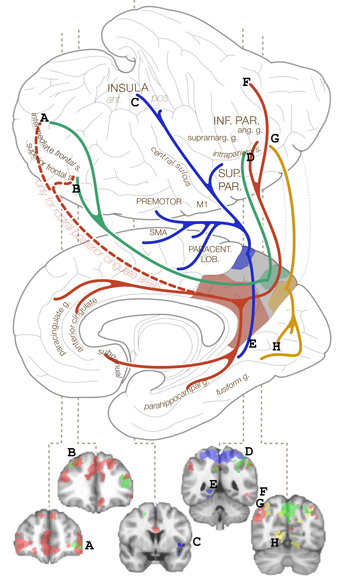
Fig. 1. Connections of different divisions of the precuneus with other areas of the cerebral cortex (diagram taken from [24]).
Let us especially note the connections of the central region of the precuneus (shown in green in Fig. 1). Toward the frontal lobes, they lead to the dorsolateral prefrontal cortex, which is responsible for executive functions (the “amplifier of thinking” that implements the higher dimensionalities of functions from the standpoint of socionics). But there is also a connection with the inferior parietal cortex, which is a crucial region responsible for speech (not only for meaning, but also for the structure of speech), perception of metaphors, mathematical abilities, perception of other people’s motivation (theory of mind), and, in part, viewing one’s own body from the outside (experiments involving the “soul leaving the body” during stimulation of the angular gyrus). Previously, V. Talanov associated the left (speech) region of the parietotemporal cortex with intuition [14]; he also associated the right frontal cortex with intuition [19], which, in general, is consistent with the facts listed above.
However, the other divisions of the precuneus maintain connections both with the sensory/motor cortex and with the limbic (cingulate) cortex responsible for emotions; see Fig. 1. In addition, already in [9] I noted that the flow of free thoughts in the head is not necessarily intuitive in the aspectual sense, since thoughts may have quite sensory content. Similarly, although a linguistic sign “in itself” is intuitive (in the sense that there is no sensory similarity between the signified and the signifier), its signified (= the meaning of speech) may belong to any aspect. Thus, most likely, what we encounter here is a dual-purpose structure: the inferior parietal lobes, “originally” oriented toward solving intuitive tasks, acquired the capacity to process information in any aspect as the connections of the central division of the precuneus developed and integration with the other brain functions deepened. Similarly, the dorsolateral PFC originally belonged, most likely, entirely to the sphere of logic, but subsequently, as integration among brain systems deepened, it acquired the capacity to “amplify” the thinking of any other function.
As a result, the entire system “central precuneus – inferior parietal cortex – dorsolateral PFC” became configurable. According to our approach, its parameters are the connections of the PFC and inferior parietal cortex with specific cortical areas where not only information for each aspect is stored, but also the meanings of words belonging to that aspect. (It is known that the lexical inventory of different word forms is largely “distributed” across different cortical regions; thus, the meanings of verbs (Te) are stored mainly in the left frontal cortex, nouns (Si, Se) in the right middle parietal cortex, and prepositions (Ti) in the left parietal cortex.) These connections ultimately establish the preference and priority of some aspects over others: PFC settings determine function dimensionality, while inferior parietal cortex settings determine preferences in the use of aspect-related vocabulary. It is possible that these settings are actually unified and are determined by the integrating node of the DN, the precuneus. (For example, through asymmetric closure of the central division of the precuneus onto the connections of its other divisions with specific motor, sensory, and emotional areas; the thalamus may also participate here, using its activation to “illuminate” the required cortical regions according to “instructions from above,” from the precuneus.) But theoretically, a case of at least partial independence of the PFC and inferior parietal cortex tuning parameters is also possible, in which some functions are multidimensional while the vocabulary tends toward other aspects.
Let us once again list the principal structures included in the DN and determining the characteristics of spontaneous background thinking:
- the precuneus (part of Brodmann area 7), more precisely its central division, which acts as the central connection node (hub) of the network;
- the inferior parietal cortex (angular and supramarginal gyri, areas 40 and 39) – a region responsible for speech (in the left hemisphere), as well as for theory of mind, mathematical abilities, and so forth;
- the prefrontal cortex – the executive system (areas 46, 9, and possibly frontal area 10, whose functions remain poorly studied); it is a general “amplifier” of thinking, giving it flexibility and the ability to find new ways of acting under changing conditions, without external instructions and prolonged error correction (in socionic terms, the higher dimensionalities of functions);
- the posterior cingulate cortex (areas 23, 31) – the motivational and emotional center of the DN; it provides the motivational “core” of spontaneous background thinking (including dominance of the motivation of a particular socionic function; see [9]);
- connections of the precuneus with the dorsal thalamus, which provide control of cortical activation by the DN node (activation is needed, first, for normal self-retrieval of information from memory and, second, for synchronization of the activity of the connected regions so that information arrives in the appropriate phase of the electrical activity of the target region).
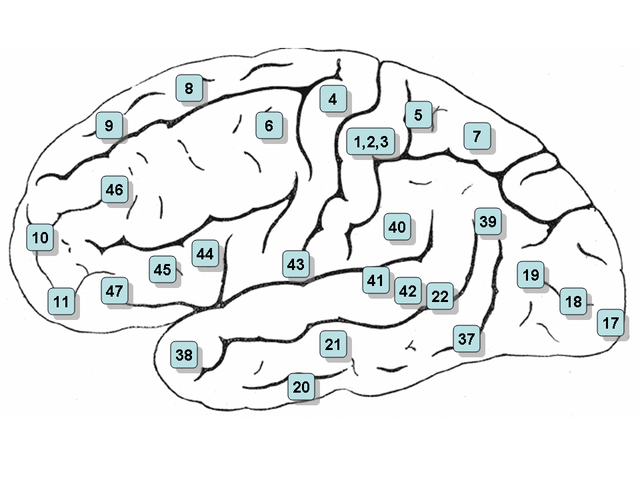
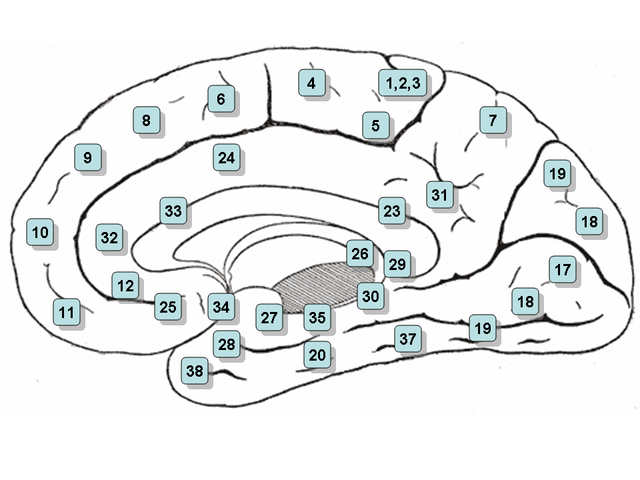
Fig. 2. Map of the lateral (outer) and medial (inner) surfaces of the cerebral cortex with Brodmann areas indicated (diagram from Wikipedia, Brodmann area).
We will call these the structures of the psyche’s internal information metabolism.
Why did I choose this name rather than considering this system simply intuitive (see above)? In [9] I introduced the concept of information-metabolism intensity as a conventional measure of the “number of thoughts in one’s head,” and even then noted that it corresponds to intuition as understood by a substantial proportion of socionists, in particular Talanov. But in addition to quantity there are qualitative characteristics of the flow of thoughts – the predominance of mental activity in some aspects over others (including the predominance of these aspects in inner speech, and in external speech as well). A high overall “intensity of thoughts” by no means implies that those thoughts are shifted toward intuitive aspects; they may also be entirely sensory, with the higher dimensionalities of sensing rather than intuition engaged, with an activation block in sensing, and so forth.
Motivational Centers and Their Localization in the Cerebral Hemispheres
Previously, in [11], I analyzed two types of factors affecting the development of intercenter connections in the brain (and, from this, the formation of the TIM) – genetic and epigenetic factors, in particular the maternal effect. The essence of the latter can be seen in E. S. Filatova’s statistics [20], where, in addition to a large number of children whose TIM was identical to their father’s (27%, which indicates an unquestionable genetic contribution to TIM), there were also quite many children who were in Duality or Extinguishment relations to their mother (33%). This effect depends on the child’s sex and is more pronounced in sons (41%); in daughters it is somewhat modified – Duality and Extinguishment relations to the mother occur slightly less often, but there is a more general inverse effect for the extraversion/introversion trait: in 2/3 of cases, the daughter’s extraversion/introversion pole is opposite to the mother’s.
If we assume that this maternal effect (ME) is established not prenatally but in the very earliest postnatal period (the first weeks of the child’s life), it can be regarded as a social adaptation: the child’s brain to some extent adjusts to the mother’s communication style, which may improve their interaction. It should be specifically noted that this is not upbringing and not imitation, since these are the first weeks of life, and the child does not copy the mother but, on the contrary, becomes somewhat more distant from her in communication style (in particular, tending toward the opposite extraversion/introversion pole). Most likely, the strength of ME can vary from case to case, because the mother’s behavior and communication style depend not only on her TIM, but also on situational and cultural factors.
In [11] I proposed an approximate scheme for TIM formation as the product of two separate groups of factors: temperament (extraversion/introversion + rationality/irrationality) and attitude (club). ME was assumed to influence both, but in different forms. However, a more in-depth analysis of Filatova’s actual statistics revealed a much more complex picture. The Reinin traits rationality/irrationality and democracy/aristocracy (and the process/result trait that complements them) proved to be least affected by ME. In addition to extraversion/introversion, ME strongly affects the Reinin trait Questimity/Declatimity, but only in sons. ME influences the Jungian sensing/intuition trait together with a genetic factor, while logic/ethics appears to be determined by democracy/aristocracy and by the already formed sensing/intuition trait (although the details of this interaction could not be fully clarified). A detailed analysis of Filatova’s data is presented in the appendix.
According to neurophysiological and neurogenetic data, genetic and environmental factors (to which ME, in essence, also belongs) participate to different degrees in the development of different brain structures. The development of subcortical structures is determined to the greatest degree by genetic factors; short-range connections (between adjacent cortical areas and within the same area) by environmental factors; while in the development of long-range connections (between distant cortical regions, as well as from cortex to subcortex), factors from both groups make comparable contributions [4]. Within the hypothesis that TIM is determined by the balance of connections of the default network and depends both on ME and on genetics, it is logical to conclude that it should be determined by long-range connections. But it is better to begin the analysis with the traits least dependent on ME – rationality/irrationality and democracy/aristocracy. For the first of these, V. Talanov showed that rationality is associated with a predominance of activity in the anterior regions of the brain, while irrationality (perceiving functions) is associated with posterior and temporal regions [17]. The question is: with which brain structures can the second trait, democracy/aristocracy (or the process/result Reinin trait that complements it), be associated? More precisely: might one of these traits reflect another fundamental asymmetry of the brain – the left-right asymmetry?
This idea arose from the fact that in [10, 11] I had already considered a model consisting of 4 separate executive centers of the brain – in the left and right hemispheres, in the prefrontal and inferior parietotemporal regions. In the same way, four motivational centers (MCs) can be distinguished, whose function is to integrate and coordinate the operation of the cortex (including fragments of the background thinking system) in accordance with specific tasks and with a person’s motivation. Two of them are located in the posterior cingulate cortex (left and right); for their operation as part of the DN, see [23]. The other two would be located either in the anterior cingulate cortex (anterior cingular cortex, Brodmann areas 24, 32, 33; see Fig. 2), or, alternatively, in the ventromedial prefrontal cortex (part of area 10), likewise symmetrically in the two hemispheres. Let us consider separately the characteristics of the operation of the anterior and posterior regions of the hemispheres described in the literature [1, 13].
Experiments show that the frontal lobes are most active when solving new tasks or complex tasks requiring special concentration. As habituation and routinization occur, activity shifts toward posterior centers, which are less powerful and therefore consume less energy [1]. For this reason, multidimensionality of thinking (in the socionic sense) can be attributed to the activity of the frontal lobes. However, multidimensionality is provided not by motivational structures, but by the prefrontal executive centers (areas 9, 46; see above and also [22]). Through the DN system, the latter are also connected with the posterior MCs, meaning that multidimensionality is not an exclusive property of the anterior MCs.
It is also considered established that frontal-lobe activity is associated with volitional effort, with concentration of attention and will on the specific task being solved [1]. That is, the posterior motivational centers are more spontaneous in their operation, while the anterior ones are more systematic, which in socionics is reflected in the rationality/irrationality trait (as V. Talanov noted long ago). It can be assumed that the anterior MCs are more active in rationals and the posterior MCs in irrationals, but both can have access to the higher dimensionalities of functions.
Left-right asymmetry of activation is traditionally associated with verbal/nonverbal or conscious/unconscious thinking (in “standard right-handers”). However, there are other characteristics as well. According to [1], the right frontal lobes are activated in situations of novelty and, more importantly, uncertainty: when it is not known a priori exactly what goal should be pursued, what criteria of success should be followed, or what means should be used. The left frontal lobes, by contrast, are activated when solving tasks that may be complex or new, but are solved according to a model – when the goal, evaluation criterion, and/or method of solution is specified externally. (Later, as routinization occurs, brain activity in such tasks shifts to the posterior-right center, which triggers an already developed automatism in the appropriate situation [13].) But if the method of solving the task is not specified a priori, or the task itself is posed in free form, the right frontal center is activated together with the left posterior center – the “creative thinking” diagonal [6]. The left posterior center most likely coordinates the solution of tasks in an already established situation and with familiar tools, while the right anterior center selects goals, criteria, and tools for solving problems in new situations.
According to [1], left- and right-hemisphere decision-making strategies (the so-called cognitive styles) differ in their adaptive purpose. The essence of the left-hemisphere strategy (according to [1], context-dependent) is the tendency to “fit” decisions as closely as possible to the specific characteristics of the current situation (= context); hence the tendency to take as many details as possible into account. At first glance, this strategy appears to be the only optimal one; however, it ceases to work if the situation changes radically and the old evaluation criteria, together with accumulated experience, stop working. Under such conditions it is no longer known which methods are correct or which evaluation criteria should be used. Here the right-hemisphere (context-independent) strategy proves more productive: ignoring the details of the situation and following more general criteria that are potentially applicable across a wide range of conditions. The goal is a relatively rapid response in an unfamiliar situation, without “getting stuck” and prolonged deliberation.
It is not difficult to see the similarity between this description of left- and right-hemisphere strategies and the socionic “Left/Right” trait, whose semantics include precisely a tendency toward simplification or complication [2]. In this case, the left-hemisphere strategy is socionically “Right,” while the right-hemisphere strategy is “Left.” One can also see another manifestation of the same Reinin trait – process/result. The left-hemisphere strategy implies an orientation toward process – thinking through step-by-step plans or acting through a sequence of situations that change only within specified limits, which makes it possible to rapidly take each change in key factors into account. The right-hemisphere strategy, by contrast, consists in refusing to become drawn into the process, interrupting unnecessary deliberation, and accepting the obtained result precisely as a result (rather than as the starting point for another round of deliberation, something of which “Right” TIMs are often guilty).
In the socionics literature, the possibility of linking the “process/result” trait to the cerebral hemispheres is mentioned by V. Mironov [5], but without reference to the specific author of the idea, merely as a mention that such a hypothesis existed at an early stage in the development of socionics.
In principle, activity of the left and right hemispheres can alternate and switch as the situation unfolds: under familiar conditions the dominant activity shifts to the left, while under unfamiliar or unexpectedly changing conditions it shifts to the right. Of course, the relative activity of the hemispheres and motivational centers (in the left-right and anterior-posterior directions) may differ among individuals – this is one form of interindividual differences [13]. It determines the brain’s ability to operate in different modes and preferences for different cognitive styles [1]. Thus, high activity of the left frontal cortex is considered optimal for activities requiring a high concentration of attention and selection of the correct response in a complex but familiar environment (operator activity). If the posterior motivational center is more active, this will manifest as a tendency to simplify and automate responses. High activity of the right frontal cortex most likely results in a tendency toward “creative” problem solving at one’s own discretion (in contrast to activity of the left frontal center, which operates primarily according to narrow criteria specified externally).
A very important qualification concerning the activity of the four MCs must be made here. Their activity can, of course, change depending on the situation. However, what interests us here is not the MCs or the hemispheres in themselves, but their role in internal information metabolism. This role is determined by the connections of the MCs with the DN (including the precuneus), and these connections are relatively stable and change little (compared with the activity of the connected regions, which varies very widely as the situation unfolds). That is, during a period in which DN activity predominates (= the background-thinking mode), the MC that is connected to the DN more strongly than the others will be engaged. As a consequence, the corresponding poles of rationality/irrationality and democracy/aristocracy will manifest in the operation of the DN. Because the connections of the MCs with the DN are long-range connections (see above), they should be determined mainly by genetic factors, with the maternal effect influencing them in some cases (on the inheritance of rationality/irrationality and democracy/aristocracy, see the appendix).
Motivational Centers and Model A
The form of motivational blocks – connections that ensure automatic activation of the base function in response to activity of the creative function – depends on the rationality/irrationality and democracy/aristocracy traits. Taking into account what was said about localization of the traits by hemisphere, the following scheme of localization of motivational blocks by motivational centers is obtained:
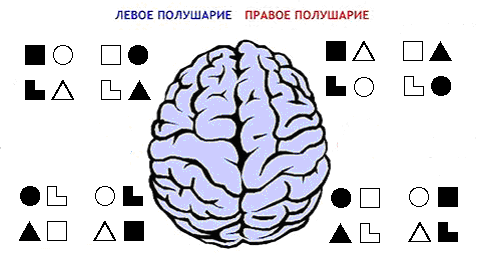
Fig. 3. Distribution of motivational blocks across the cerebral hemispheres.
For example, if the leading MC is the left anterior one, sensory perception of things will automatically activate logic, with logical evaluation and analysis of objects (as well as the construction of action plans) becoming the primary task and pushing perception itself into the background. But if the leading MC is the right anterior one, sensory signals will be transformed primarily into emotional evaluation, while logic will be activated in response to intuitive association-signals. The anterior MCs activate rational, evaluative functions in response to sensory perception and intuitive associations; the posterior “irrational” MCs, conversely, activate sensing (actions, search activity) or intuition (the associative apparatus) in response to logical or emotional signals.
Let us note that the four blocks of Model A – Ego, Id, Superego, Superid – have turned out to be “crammed” into a single motivational center. This seemingly secondary detail may prove crucial for the substantiation of Model A from the standpoint of neurophysiology. More precisely, this set of four motivational blocks may be able to operate simultaneously without switching MCs and, consequently, without “breaking off” the DN mode to which the leading MC is tied. Of course, not all four possible blocks within a given MC will be able to operate equally, in the same capacity: one of them will dominate, one pair of functions will be multidimensional, and the other low-dimensional.
The choice of the leading block within an MC, judging by Filatova’s data, is determined with decisive participation of the maternal effect, but also with the influence of genetic factors (see the appendix). The most likely mechanism for differentiating the blocks is the formation within the MC of an opposition between “perceiving” and “acting” blocks: the first reflects the mother’s actions and signals, while the second controls the child’s own activity and the signals by which the child communicates with the mother. The “acting” block (Ego) is most often established in a Superid relation with the perceiving block, judging by the predominance of the child-mother Duality relation. In this way, ME “completes the determination” of the remaining TIM traits: extraversion/introversion and one of the two dichotomies, logic/ethics or sensing/intuition (the other is then additionally determined by democracy/aristocracy). But this is not the only possible relation between the “acting” and “perceiving” blocks. Thus, they may be established in an Id relation (an Opposite child-mother relation is also a frequent case in Filatova’s data). In addition, the “acting” and “perceiving” blocks may even turn out to be in different MCs, especially in the case of heterozygosity for the factor encoding the strength of the MC’s connections with the DN. Then the child-mother relations will also be different and, much more importantly, the remaining TIM traits may be determined not by ME but by genetic factors. (Evidence for this is the frequent identity of the child’s type with the father’s; moreover, in Filatova’s data, ME for extraversion/introversion “works” only when the mother and child are on the same rationality/irrationality pole. The limited amount of statistical data did not allow me to fully determine the inheritance patterns of all TIM traits.)
The variety of possibilities for the perceiving-acting block relation during the period when ME operates (which is, presumably, the first weeks of the child’s life) raises a number of serious questions that go beyond existing socionics theories. For example, it may turn out that the nature of the operation of functions and blocks depends not only on their position relative to the leading block (which is precisely what Model A describes), but also on the interaction of the specific factors (genetic factors and ME) that formed the settings of information metabolism. This can be regarded both as subtype variability and as a source of possible discrepancies between the actual interaction of functions and Model A. These questions are extremely interesting, but at the present level of socionics it is very difficult not only to solve them, but even to formulate them in a sufficiently constructive form; this is hindered by the limitations of the conceptual apparatus, which is aimed at describing only traits from the Jungian and Reinin bases, rather than the mechanisms of their operation and formation.
Another possible parallel between MC interaction and Model A is that periodic alternation of activity between two “same-hemisphere” MCs can be interpreted as alternation of phases of information metabolism along the Supervision or Benefit ring. (Note: I do not believe that the DN is rigidly tied to only one MC and that all the others are completely inaccessible to it. It seems more natural to assume that the DN maintains connections with all MCs and can activate them depending on the situation. But the relative weakness of the connections means that this activity cannot continue for sufficiently long and ultimately “slides back” toward the “main” MC. If, however, the connections of two MCs with the DN are comparable in strength, this may be expressed in periodic switching between two modes, as in the case described for the Benefit/Supervision rings. If the two strongest MCs are diagonally opposite one another, this will lead to alternation of rational and irrational modes of the same democracy/aristocracy pole: for example, the mirror pairs SeTi – TiSe for the “aristocratic” posterior-right/anterior-left diagonal, or NeTi – TiNe for the “democratic” posterior-left/anterior-right diagonal, which is consistent with the pattern of cortical diagonal activity during “object-based” and “creative” thinking described in [6]. Comparable activity of symmetrical MCs in the two hemispheres will probably lead to alternation of activity between “Business” or “Kindred” modes of thinking.)
Finally, the activity of the central connection node of the DN, the precuneus, can be considered as a separate subtype factor. The more active it is, the stronger the exchange of information between distant cortical regions – irrespective of the asymmetry of the DN’s connections with the MCs themselves (as well as with the areas where information on individual aspects is stored, with activation centers, and so forth). This is very similar to the sensing/intuition trait, but I have already said that, at the theoretical level, activity of brain systems should be attributed to subtype, while only the balance of their connections should be attributed to the TIM proper [9]. That is, overall DN activity determines subtype-level intuition/sensing – the “number of thoughts in one’s head,” in V. Talanov’s expression, which in turn is very close to V. Gulenko’s information/energy dichotomy [3]. Possibly, this is determined by a genetic factor (see the appendix).
* * *
In conclusion, it must be said that the scheme of motivational blocks described above and their distribution across the cerebral hemispheres remains hypothetical. It follows primarily from Filatova’s statistics, in which some traits (rationality/irrationality, democracy/aristocracy, and the process/result trait that “closes” them) showed more “classical” patterns of inheritance from the standpoint of genetics, whereas the other traits are very strongly influenced by the maternal effect, which is essentially an environmental influence rather than a genetic factor proper. While considering these questions, I also examined other hypotheses. At first, I supposed that TIM was determined by the DN settings only of the speech-dominant (normally left) and more “conscious” hemisphere, because these settings could determine both preferences in the aspectual structure of speech and the greater or lesser “awareness” of those same aspects. I then considered the possibility of distributing the four blocks of Model A among the four MCs, with the Ego block on the left/anterior, Id on the right/anterior, Superid on the left/posterior, and Superego on the right/posterior (multidimensional blocks anteriorly, low-dimensional blocks posteriorly; valued functions, which are also verbal, on the left, and non-valued functions on the right). In these cases, the maternal effect would set the parameters of the left posterior center (presumably Superid, consistent with the high probability of formation of a psyche dual to the mother’s). I then considered different schemes for distributing the blocks among the MCs (not only according to Model A), with the distribution depending on genes inherited from the mother and father as well as on ME; in theory, something resembling an intratype relation between the genetic and “attitudinal” (ME) factors in TIM formation emerged. But later I rejected these schemes in favor of a fixed distribution of blocks among the MCs. (I will note once again that the left- or right-hemisphere location of the MCs is completely unrelated to speech functions or to the dualism “consciousness – unconsciousness.” Speech functions are specific cortical areas, Broca’s and Wernicke’s areas, whose activity unilaterally on the left correlates with activity of the central precuneus (see Fig. 1 above), whereas the MCs are located in the limbic cortex, which is not directly related either to speech or to “consciousness.”) I decided to present these working hypotheses here because other socionists may find them more plausible, and the question itself can in no way be regarded as finally resolved.
July-December 2012
References
Goldberg E. The Executive Brain: Frontal Lobes, Leadership, and Civilization. Moscow: Smysl, 2003.
Gulenko V. V. Forms of Thinking (2002).
Gulenko V. V. The Energy Model of a Socionic Object: Structure and Functioning (2007).
Ivonin A. A., Tsitseroshin M. N., Pogosyan A. A., Shuvaev V. T. Genetic determination of the neurophysiological mechanisms of cortico-subcortical integration of brain bioelectrical activity. Russian Physiological Journal. 2002. Vol. 88, No. 10. Pp. 1330-1342. (Abstracts here.)
Kochubeeva L. A., Mironov V. V., Stoyalova M. L. Socionics. Semantics of Information Aspects. St. Petersburg: Aster X, 2006. 146 pp.
Pavlova L. P., Romanenko A. F. A Systems Approach to the Psychophysiological Study of the Human Brain. Leningrad: Nauka, 1988.
Popov I. The Basis of Socionic Functions and Aspects from the Standpoint of Ethology and Evolutionary Psychology (2009).
Popov I. Positivism/Negativism, Questimity/Declatimity, and Functional Asymmetry of the Brain (2010).
Popov I. Connections (Blocks) of Socionic Functions (2010).
Popov I. The Neurophysiological Nature of Function Dimensionality (2011).
Popov I. Factors in the Formation of the Socionic Personality Type and Their Interaction (2011).
Ravich-Shcherbo I. V., Maryutina T. M., Grigorenko E. L. Psychogenetics. Edited by I. V. Ravich-Shcherbo. Moscow, 1999. Pp. 349-362.
Rusalova M. N. Functional Asymmetry of the Brain: Emotions and Activation. In: Functional Interhemispheric Asymmetry (eds. N. N. Bogolepov, V. F. Fokin). Moscow: Nauchny Mir, 2004.
Talanov V. L. New conceptions of the physiological mechanism and localization of the basic Jungian functions. Socionics, Mentology and Personality Psychology, 2002, No. 4.
Talanov V. L. A Brief Exposition of Model T: A Physiological Model of Information Metabolism in the Human Psyche.
Talanov V. L. The Structure of the “Intuitive-Sensing” Trait and Its Hypothetical Cognitive Mechanisms (2007).
Talanov V. L. Detailed Cluster Structure and the Cognitive and Physiological Mechanisms of the “Irrational-Rational” Trait (2007).
Talanov V. L. Markers of Dominance of the Ergotropic Sympathetic System and Neurotransmitter Activity in Projection onto Socionic Traits (2007).
Talanov V. L. Everything Unknown and Little-Known About the Eight Functions of the Psyche. Part I: Calculation of Functions, Quantitative Value of All Functions in the Psychotype, Content of the Functions (2012).
Filatova E. S. Socionic Statistics for 299 Women, Men, and Their Children. Socionics, Mentology and Personality Psychology, Kyiv, 2000, No. 6 (33).
Fridman V. S. “Human” and “Animal”: Where Should the Boundary Be Drawn?-1 (2010).
Wikipedia articles: