Useful Information for a General Understanding of Socionics: How the Biosocial Environment Can Influence Sociotype
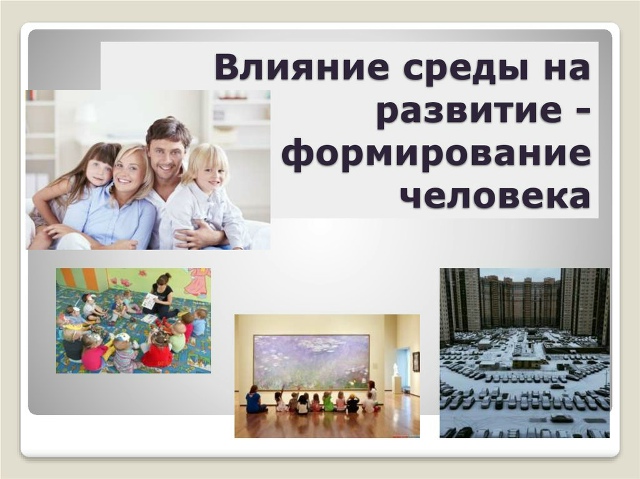
Let us attempt to enumerate the environmental factors that may reinforce the poles of individual Reinin traits in a particular person or in society as a whole. We particularly emphasize that the environment can influence sociotype both at the individual level - through the particular features of an individual’s ontogeny and adaptation to their surroundings (especially in childhood, when personality is particularly plastic) - and at the population level - through natural selection.
Extraversion: the subject’s development in an external environment (natural and/or social) that is readily amenable to attempts to change it (responsive to the subject’s actions, friendly, or compliant); the subject’s possession of tools (physical or social - for example, high rank) for influencing the surrounding environment
Introversion: the subject’s development in an external environment (natural and/or social) that is resistant to attempts to change it, offers resistance, is hostile, or, in the extreme case - demonstrates that nothing depends on the subject’s efforts (see “learned helplessness syndrome”); also - the subject’s possession of innate special abilities that enable them to achieve a considerably higher level of quality in some sphere of activity than the average in their surroundings
Logic: male sex; the eldest / only child in the family; a position of strength in relationships with other people; development under conditions in which resources are acquired independently (which encourages the development of one’s own strength, intelligence, and ingenuity)
Ethics: female sex; the youngest child in the family; a position of weakness in relationships with other people; development under conditions in which it is more advantageous to engage not in acquiring resources oneself, but in redistributing what has already been acquired among members of society (which encourages the development of the ability to adapt to other people and discern their abilities and needs)
Sensing: rural society (which accustoms people to physical labor from childhood, with a fundamentally narrow horizon of possibilities); prolonged life in familiar material surroundings with an unambiguously determined future, in a situation in which new opportunities and dangers are no longer encountered (which is typical of older ages, as well as of rural life)
Intuition: urban society (with a prolonged period of training young people in symbolic and abstract thinking that is weakly connected to practical skills); younger ages (the factor of the ability to learn fundamentally new knowledge and skills correlates strongly with intuition and declines with age, and in humans this decline is greatly slowed compared with other animals: by biological standards, humans are a highly intuitive species)
Rationality: the duration of the historical stage of a population’s existence (during which natural selection favors subjects who are more law-abiding and more predictable to those around them)
Irrationality: societies that have recently embarked on the path of civilization and have not yet eliminated natural instincts in their members
Decisiveness (a value of the central quadras): development and life at the center of a biosocial system, under conditions of a high concentration of resources and intense competition for them; manifestations of the trait intensify when a resource shortage arises abruptly (or, which is in principle the same thing, when population density increases sharply without a proportional increase in the resource base) - when any neighbor begins to be perceived as an “extra mouth” in the struggle for a limited resource
Judiciousness (a value of the peripheral quadras): development and life on the periphery of a biosocial system, under conditions in which resources are highly dispersed and all subjects are occupied with searching for, gathering, and processing them (when no time or energy remains for strife); manifestations of the trait intensify when an abundance of resources suddenly emerges (or when population density decreases sharply - for example, after wars and epidemics - while the resource base is preserved)
Merriness (subjectivism, a value of the ascending quadras): the individual’s youth or the identification of one’s life goals and meanings with a young, extensively expanding system; in general, an early historical period corresponding to low population density and disunity within the population, and the presence of a large quantity of unexplored “unclaimed” resources (the “world of the wasteland”)
Seriousness (objectivism, a value of the descending quadras): the individual’s old age or the identification of one’s life goals and meanings with a mature system that has “grown into” its surroundings and seeks not to spread, but only to optimize existing processes and connections; in general, a late historical period (“civilization”), associated with the population’s entry into a “potential well” of comfortable living (created earlier through the efforts of predecessors), from which it is no longer able to escape, so that all that remains is to exploit local resources until they are completely exhausted.
Aristocracy: development and life in a society in a nonequilibrium state (of expansion, unification, and progress or, conversely, contraction, disintegration, and regression) - where the fate of the average individual differs greatly across social groups
Democracy: development and life in a society in an equilibrium state (for example, fragmentation and poverty or unity and wealth) - where the fate of the average individual depends more on their personal abilities than on membership in one group or another - now appears at least debatable; but, definitely, aristocracy is associated with a traditional way of life (especially - a rural one), with a pronounced estate/caste structure in society, with endemism and group defense against outsiders (parochial altruism); democracy - with the acceleration of historical time, the blurring of social boundaries, emancipation, urbanization, and cosmopolitanism [author’s note, 07.2026]
Statics: solitude (distancing oneself from people); the absence of people with whom the subject links their fate
Dynamics: having a family and especially children, and an empathic connection with them; living under someone’s patronage
Questimity: personality characteristics that are unusual for the population
Declatimity: the individual’s closeness to the population norm on all important parameters
© Ivan Romanov, Saint Petersburg, August 2018