Personality Traits Associated with the Static–Dynamic Dichotomy
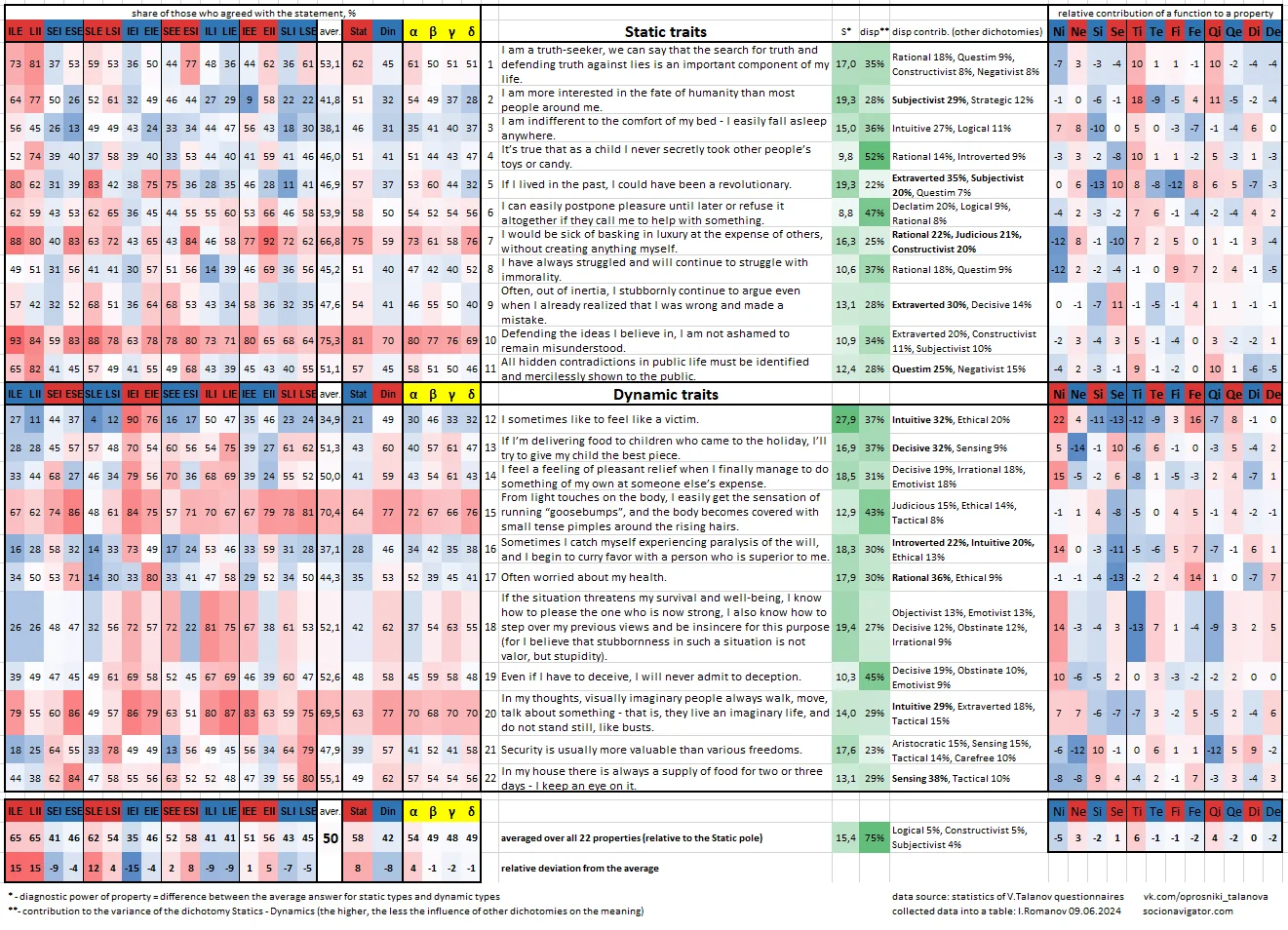
Manifestations of Statics associated with certain functions:
- Ne: ideological asceticism, disinterestedness in one’s idealistic thoughts and undertakings
- Se: stubbornness in forcefully pushing one’s position, insensitivity to threats, pain, and punishments on the path to a goal
- Ti: sharp and principled in judgments, unwillingness to adjust to public opinion
- Fi: strict moral principles imposed on people (first of all, on oneself), selflessness in defending the weak
- Qi: truth-seeking, desire to learn and reveal the truth to the world, no matter how unpleasant and dangerous it may be
- Di: tolerance for prolonged inconveniences and hardships - if required by the fulfillment of duty
Manifestations of Dynamics associated with one or another function:
- Ni: willingness to parasitize; importance of preserving ways to evade responsibility – likes to declare itself a victim of circumstance or of someone else’s strong will
- Si: hedonism and sybaritism; importance of grooming, comfort and pleasure; avoids activities that require overexerting the body and mind
- Te: the importance of preserving one’s source of well-being: encouraging revolution and heroically sacrificing oneself is clearly not his.
- Fe: the importance of social “stroking” – ready for any change of repertoire, just to be liked, to remain popular and recognizable in his group.
- Qe: the importance of feeling one’s priority; capriciousness - puts one’s immediate desires above any necessity
- De: the importance of feeling the fullness and diversity of life; superficiality - avoids complex topics that require complete dedication to them, disconnecting from the world.
General manifestations of the Static / Dynamic dichotomy, regardless of the balance of functions:
Evolutionary-biological level
Static: the struggle of one’s internal program to win in selection
Dynamic: situational adaptation to an ever-changing environment
Features of perception
Static: reading of the balance of forces and the nature of the potentials of surrounding subjects; the visual analyzer dominates (perceiving space as a system of distances)
Dynamic: reading of time, pace of movement and superficial (not affecting the essence) changes of surrounding subjects; the auditory analyzer (perceiving the intensity of processes through their timbres of sound) is relatively dominant.
Level of personal priorities
Static: eternal values are prioritized; it is more important to maintain one’s position
Dynamic: immediate needs are prioritized; it is more important to stay with resources
Attitude to self-sacrifice
Static: capable of self-sacrifice
Dynamic: likes to look like a victim
Social roles
Static: moral guide; changing the world through volitional effort
Dynamic: opportunist, changing according to the demands of the dominant will in the world - “fluctuating along the party lines”.
Ideals
Static: autonomous fighting unit
Dynamic: irreplaceable (under any masters) supplier of quality resources.
Weaknesses
Static: inability to achieve real resource self-sufficiency (you either have to constantly feel the lack of resources, or adjust to someone else anyway)
Dynamic: falling into a comprehensive dependence on critical counterparties (suppliers or consumers of the resource).